2026 Top Bunk Bed Frame Trends for Global Buyers
The 2026 Bunk Bed Frame market is moving beyond simple space saving. Global buyers now expect stronger construction, safer access, and clearer material information. Grand View Research reports continued growth in the global furniture market, supported by urban living and smaller bedrooms. Market estimates differ, however. That difference deserves attention.
Safety remains the central purchasing signal. The U.S. Consumer Product Safety Commission requires guardrails, durable fasteners, and strict structural performance under federal bunk-bed rules. ASTM F1427 also provides voluntary safety guidance for children’s bunk beds. In Europe, EN 747 focuses on stability, openings, ladder design, and fall protection. These standards influence export-ready designs, even when buyers compare prices first.
“Bunk beds can be dangerous if they are not used properly,” warns Dr. Gary Smith, a pediatric injury-prevention specialist associated with child safety research. His point is practical. A strong frame cannot correct poor assembly, unsuitable mattress height, or careless use. The 2026 trend therefore favors integrated guardrails, anti-slip ladder steps, rounded corners, and tool-assisted installation. Better details matter.
Digital buying is changing expectations too. Buyers want load ratings, test evidence, spare-part access, and transparent packaging dimensions. Retailers increasingly examine lifecycle value, not only the lowest factory quote. Recycled steel and certified wood may gain attention, but claims need verification. Green labels can be vague.
This article examines the leading 2026 Bunk Bed Frame trends for global buyers, including modular layouts, safer engineering, compact shipping, and responsible sourcing. Some predictions may prove imperfect. Consumer behavior changes quickly. That uncertainty should encourage testing, not careless confidence.
2026 Global Bunk Bed Market Outlook: CAGR, Demand Drivers, and Buyer Segments
Global bunk bed demand is entering 2026 with a measured, mid-single-digit CAGR outlook. Forecasts vary by region, product definition, and reporting method. That gap matters. Urban apartments, rising rental costs, and smaller bedrooms continue to support space-saving furniture. Student residences, worker accommodation, and budget hotels add institutional demand. However, housing cycles can quickly weaken orders in price-sensitive markets.
Family buyers usually prioritize guardrail height, ladder comfort, mattress compatibility, and easy cleaning. Schools and dormitory operators focus on load ratings, rounded edges, spare parts, and inspection records.
Distributors need carton efficiency, stable lead times, and finishes that fit several price tiers. In practical procurement, a frame may look strong but fail when assembly instructions are unclear. Small details matter. A missing fastener can delay an entire room installation.
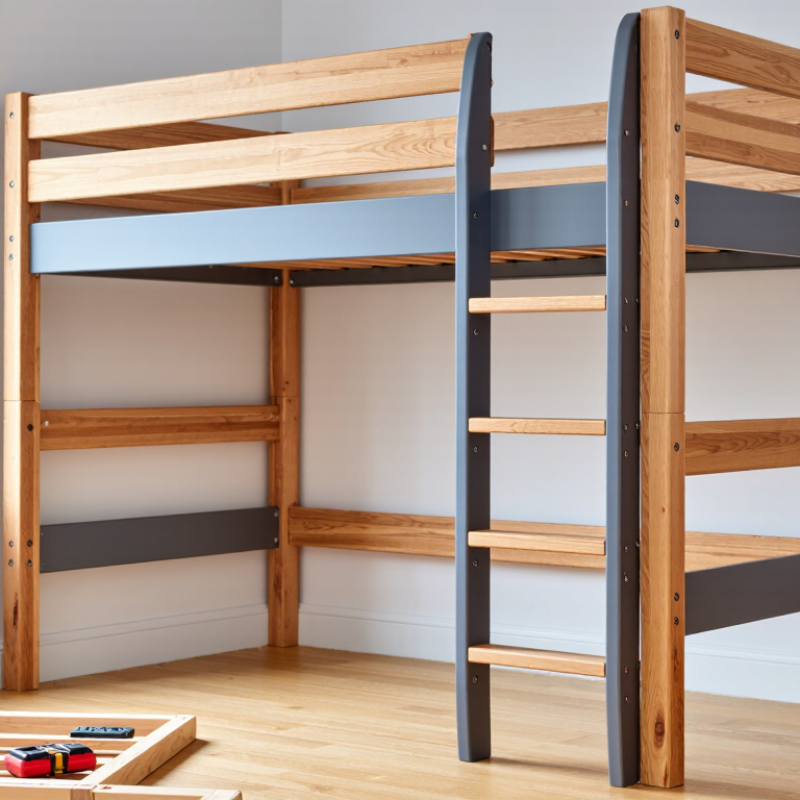
Frame trends for 2026 include convertible designs, integrated desks, thicker steel sections, and warmer wood finishes. Buyers also request low-noise joints and packaging that reduces corner damage during long-distance shipping. Demand is not identical worldwide. North American households often seek flexible storage, while dense Asian cities favor compact footprints. European and Middle Eastern projects may place greater weight on safety documentation and contract durability. The market still has an uncomfortable weakness: online popularity does not always equal repeat purchasing. Suppliers should test real assembly time, replacement-part access, and local compliance before scaling orders.
Safety Standards Explained: ASTM F1427, EN 747, and CPSC 5-Inch Guardrails
For global buyers, bunk bed safety begins with the guardrail, not the finish or ladder style. ASTM F1427 and the U.S. CPSC rule require the upper guardrail to rise at least 5 inches above the mattress. The rail should remain secure between its supporting posts. Openings also need careful control, because a child’s head or body can become trapped.
EN 747 uses a different measurement approach. Its guardrail height is generally assessed from the mattress surface, with a minimum of 260 millimeters for the upper bed. Buyers should confirm the exact edition and national adoption before placing orders. A mattress that is 20 millimeters thicker can reduce effective protection. Measure twice. Small errors matter.
CPSC injury surveillance has repeatedly linked bunk bed incidents with falls, unsafe gaps, and structural failure. Earlier CPSC reports estimated about 36,000 bunk-bed-related injuries among children each year, showing why visual inspection is insufficient. ASTM F1427 also covers impact, durability, and entrapment testing, while EN 747 evaluates strength and stability through defined test methods. In practical purchasing checks, inspect welds, fasteners, ladder connections, and rail movement. Ask for laboratory reports, not only compliance claims. I would also verify the mattress thickness listed in the test file; this detail is easy to overlook. Standards reduce risk, but poor assembly or later modifications can still create dangerous gaps.
Materials and Durability: Steel, Solid Wood, Load Ratings, and Lifecycle Value
2026 Top Bunk Bed Frame Trends for Global Buyers
Materials and durability now shape bunk bed purchasing decisions worldwide. Steel frames remain popular because welded joints resist splitting, while powder-coated surfaces help reduce scratches and corrosion. The World Steel Association reported approximately 1.89 billion tonnes of crude steel production in 2023, showing the material’s strong industrial supply base. Yet, steel quality varies greatly. Thin tubing can bend under repeated movement. A heavier appearance proves little.
Solid wood offers a warmer feel and useful repair potential. Properly dried hardwood can support long service, but moisture remains a serious concern. The FAO Global Forest Resources Assessment 2020 recorded about 420 million hectares of forest loss between 1990 and 2020. Buyers should request legal sourcing records, moisture-control details, and finish specifications. “Natural” is not automatically durable.
Load ratings need careful reading. A listed capacity should identify whether it covers one sleeper, total occupants, or static weight only. The U.S. Consumer Product Safety Commission’s bunk bed rule, 16 CFR Part 1213, addresses guardrails, access openings, and structural safety. It does not replace engineering judgment for international markets. Practical inspections should check loose bolts, weld continuity, ladder flex, and floor contact points. Fasteners matter. Lifecycle value also includes replacement parts, surface repair, packaging damage, and disposal. A cheaper frame may become expensive after one failed component.
Global Buying Guide: MOQ, Certifications, Shipping Data, and Supplier Evaluation
2026 Top Bunk Bed Frame Trends for Global Buyers
Global buyers are favoring low-profile bunk beds, integrated storage, and flexible ladder positions in 2026. Yet design appeal cannot replace purchasing discipline. Define MOQ by finish, size, and packaging configuration. A supplier may quote 100 units, but each color could require 100 more. For a new market, request a mixed trial order, if production terms allow it. Confirm deposit timing, sample charges, replacement policy, and realistic monthly capacity.
Safety requirements differ by destination. Request current test reports for EN 747, ASTM F1427, CPSIA, or equivalent standards, where applicable. Confirm the report matches the exact frame, materials, guardrail height, and hardware. Check the laboratory identity and test date. A certificate without matching product details is weak evidence. Ask for assembly instructions and load testing records. These documents reveal practical risks that a showroom sample may hide.
Shipping data should include packed dimensions, CBM per unit, carton count, gross weight, and loading photos. Compare container capacity using real carton measurements, not estimates. Confirm production lead time, port options, Incoterms, and booking responsibility in writing. My early freight calculations were too optimistic; packaging changes affected the final volume. Evaluate suppliers through factory audits, reference orders, sample inspections, and pre-shipment checks. Ask who controls incoming steel, welding quality, coating thickness, and final packing. Short videos help, but they are not proof. Require dated evidence.