2026 Top Concrete Delivery Equipment Types for Global Buyers
Concrete Delivery is becoming a strategic equipment decision for global construction buyers. Projects now demand faster placement, tighter quality control, and lower operating risk. The Global Cement and Concrete Association estimates that the world uses nearly 14 billion cubic metres of concrete each year. That scale exposes every delivery weakness, from congested urban roads to delayed pours on remote sites.
Market reports also show continued equipment demand. MarketsandMarkets valued the global concrete pumps market at approximately USD 4.4 billion in 2023. It projects growth toward about USD 5.7 billion by 2028. Grand View Research identifies infrastructure expansion, urban development, and equipment modernization as major growth drivers. These figures are useful, but they are not perfect. Definitions and regional data can differ.
Colin Lobo, a recognized concrete technology expert and former NRMCA executive, has emphasized a practical truth: “Concrete waits for no one.” That warning remains relevant when selecting truck mixers, line pumps, boom pumps, conveyors, and specialized placing systems. A 36-metre boom pump may suit a high-rise foundation, while a compact line pump may perform better beside a narrow European street. Buyers should compare output, reach, cleaning time, spare-parts access, fuel use, and operator training. A machine can look efficient on paper and still fail under local traffic, climate, or maintenance conditions. This guide reviews the leading Concrete Delivery equipment types for 2026, combining market evidence, field realities, and internationally recognized quality practices.
Concrete Delivery Equipment Classes: 6–12 m³ Truck Mixers Under ASTM C94
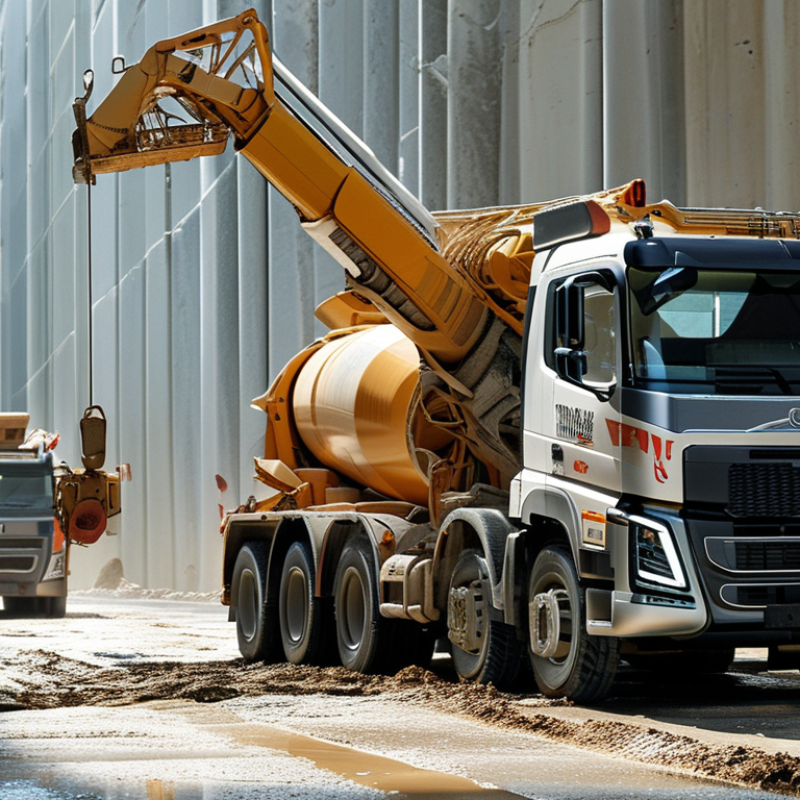
For global buyers, 6–12 m³ truck mixers are practical procurement classes, not formal ASTM categories. ASTM C94/C94M focuses on ready-mixed concrete requirements, delivery, discharge, and quality control. It does not approve a specific drum size. Buyers should match capacity with road limits, batch-plant output, and project volume.
The 6 m³ class suits narrow streets, repair work, and smaller pours. It reduces leftover concrete when daily demand changes. The 8 m³ class offers a balanced option for housing, commercial slabs, and regional deliveries. Twelve cubic metres can improve productivity on large foundations and highways. However, a full drum needs stronger access planning. Turning space, bridge limits, and unloading time can erase the expected savings.
USGS Mineral Commodity Summaries 2024 reported global cement production at approximately 4.1 billion tonnes in 2023. This scale supports continued demand for efficient concrete transport, but volume alone should not drive equipment selection. A 2024 NRMCA quality report emphasizes consistent slump, air content, and strength testing across delivery operations. Buyers should examine drum geometry, water dosing controls, discharge speed, and washout procedures. ASTM C94 also requires attention to delivery timing and concrete uniformity. Actual site conditions often differ from tender documents. That gap deserves honest review.
Stationary and Mobile Batching Plants: 30–240 m³/h Production Capacity
2026 Top Concrete Delivery Equipment Types for Global Buyers
Stationary and Mobile Batching Plants: 30–240 m³/h Production Capacity
Concrete delivery projects in 2026 increasingly depend on accurate plant selection. Stationary batching plants suit permanent sites with stable demand, prepared foundations, and organized aggregate storage. Their production range can reach 30–240 m³/h, depending on configuration, material flow, and mixing cycle. In practice, the rated output is not always the daily output. Moisture, truck availability, and loading delays matter.
Mobile batching plants offer a different advantage. They can move between road, bridge, housing, and remote infrastructure projects with less relocation work. A compact site may need only 30–60 m³/h, while large developments may require 120 m³/h or more. A level working area is still essential. Uneven ground can affect weighing accuracy and increase maintenance pressure. I have seen project estimates become too optimistic when travel time was ignored.
Buyers should compare aggregate bins, cement weighing systems, mixer design, control accuracy, and spare-part access. Local climate also deserves attention. High humidity can cause cement bridging, while cold weather may slow mixing and cleaning. Operators need clear calibration procedures and practical training, not only impressive specifications. A 240 m³/h plant may be excessive for a site with limited transport capacity. Conversely, a smaller unit can create costly waiting time during continuous pours. Reviewing real production records, service response, and installation requirements often reveals more than a capacity figure.
| Equipment Type | Typical Rated Capacity | Mobility and Setup | Aggregate Feeding System | Typical Application | Batching Configuration | Key Purchasing Considerations |
|---|---|---|---|---|---|---|
| Compact Stationary Batching Plant | 30–60 m³/h | Fixed installation Designed for relocation only with lifting and transport equipment. |
Inline or small hopper storage | Residential construction, precast yards, small commercial projects and urban sites with limited output requirements. | Usually skip-hoist or belt-fed; automatic weighing for aggregates, cement, water and admixtures. | Check available site area, foundation requirements, local electrical standards and access for aggregate delivery. |
| Standard Stationary Belt-Feed Plant | 60–120 m³/h | Permanent or semi-permanent Requires prepared foundations and dedicated material storage areas. |
Aggregate bins with inclined or horizontal conveyor | General building construction, roads, bridges, foundations and regular commercial concrete supply. | High-accuracy load-cell batching with twin-shaft or planetary mixing options. | Evaluate mixer size, aggregate bin volume, conveyor layout, dust control and spare-parts availability. |
| High-Capacity Stationary Plant | 120–180 m³/h | Fixed installation Best suited to long-term projects or centralized concrete production. |
Multiple aggregate bins with high-throughput belt conveyor | Large infrastructure projects, ready-mix distribution, airports, dams and major industrial developments. | Multiple mixers or large twin-shaft mixer with automated recipe management. | Confirm hourly output under actual mix cycles, truck-loading time, cement storage capacity and maintenance access. |
| Ultra-High-Capacity Stationary Plant | 180–240 m³/h | Centralized fixed plant Requires substantial civil works, utilities and traffic planning. |
Large multi-compartment aggregate storage with high-speed conveying | Major highways, tunnels, mass concrete works, large precast operations and continuous project supply. | Dual-line or multi-mixer arrangement to maintain production continuity. | Review redundancy, peak-hour logistics, cement and admixture storage, environmental permits and operator training. |
| Mobile Towable Batching Plant | 30–60 m³/h | Trailer-mounted Transportable between nearby job sites with limited dismantling. |
Integrated aggregate bins, usually loaded by wheel loader | Remote construction, small bridges, utility works, housing projects and short-duration sites. | Compact mixer with automated weighing and hydraulic or electric operating systems. | Check road-transport regulations, towing limits, setup time, water supply and local aggregate handling practices. |
| Mobile Belt-Feed Batching Plant | 60–120 m³/h | Relocatable Suitable for projects requiring repeated movement within one region. |
Separate aggregate bins with conveyor loading | Road construction, bridges, commercial sites and projects with changing concrete placement areas. | Horizontal or twin-shaft mixer with computerized batch control. | Compare transport dimensions, foundation preparation, aggregate stockpile layout and fuel or power requirements. |
| Containerized Mobile Batching Plant | 30–90 m³/h | Container-based Designed for shipping, modular installation and deployment in difficult locations. |
Modular bins or external aggregate feeding system | Export projects, mining areas, island locations, disaster recovery and temporary infrastructure programs. | Containerized control room with load-cell weighing and programmable mix recipes. | Confirm container dimensions, crane availability, customs requirements, climate protection and local service capability. |
| Mobile Continuous Mixing Plant | 60–180 m³/h | Highly mobile Can be moved between production locations with relatively short setup periods. |
Continuous aggregate and cement dosing from storage bins | Long roads, soil stabilization, mine haul roads and projects requiring extended, consistent pours. | Continuous proportioning rather than conventional stop-start batch cycles. | Best for consistent mix designs; verify calibration procedures, moisture compensation and permitted material tolerances. |
| Skip-Hoist Batching Plant | 30–120 m³/h | Stationary or compact mobile Requires less horizontal space than many belt-feed layouts. |
Aggregate storage hoppers with skip bucket lifting | Constrained urban sites, commercial buildings, residential developments and projects with limited conveyor space. | Central mixer or planetary mixer with vertical material transfer. | Consider lifting cycle time, skip maintenance, tower height, noise limits and aggregate moisture management. |
| Twin-Shaft Mixer Plant | 60–240 m³/h | Stationary or mobile configuration Selected where fast and uniform mixing is important. |
Compatible with skip, belt or truck-fed aggregate systems | High-volume ready-mix, infrastructure concrete, high-strength mixes and demanding industrial applications. | Rapid forced mixing with automated weighing and recipe control. | Assess mixer batch size, discharge time, liner and paddle wear, cleaning access and required mix consistency. |
| Planetary Mixer Plant | 30–120 m³/h | Stationary or compact mobile Often selected for controlled, high-quality mixing. |
Skip-hoist, belt or integrated hopper feeding | Precast concrete, architectural products, dry or stiff mixes and applications requiring intensive mixing. | Vertical-axis planetary mixing with multiple discharge and mixing-tool options. | Review wear-part costs, cleaning procedures, batch size, fiber compatibility and required consistency range. |
Trailer and Truck-Mounted Pumps: 20–180 m³/h Concrete Placement Range
2026 Top Concrete Delivery Equipment Types for Global Buyers
Trailer and truck-mounted pumps serve different placement realities, even within the 20–180 m³/h range. The Global Cement and Concrete Association reports about 14 billion m³ of concrete placed worldwide each year. That volume makes pump selection a productivity decision, not merely an equipment purchase. ResearchAndMarkets’ 2025 Concrete Pumps Global Market Report identifies truck-mounted and trailer pumps as major equipment segments, reflecting ongoing demand for mobile placement systems.
Trailer pumps usually suit foundations, tunnels, and sites where flexible hose routing matters. A 20–60 m³/h unit can handle steady residential pours with controlled output. Truck-mounted pumps generally support larger structures, longer reaches, and rapid slab placement. Models delivering 80–180 m³/h can reduce waiting around ready-mix trucks, but only when the supply cycle is stable. Otherwise, high output becomes expensive downtime. That detail is often missed.
On site, engineers should check vertical rise, horizontal distance, aggregate size, slump, and hose diameter. A 60-meter vertical pour with repeated elbows may require more pressure than the nominal flow suggests. Field crews also need clean washout areas and documented maintenance checks. EN 12001 and relevant local standards provide useful safety references, but compliance requirements differ by country. The 180 m³/h figure is attractive. It is not always practical. Poor traffic access, inconsistent concrete, or limited crew experience can make a smaller pump the better choice.
Boom Pumps and Placing Systems: Reaching 60+ Metres on Major Projects
For global buyers in 2026, boom pumps and placing systems remain vital on tall buildings, bridges, and large infrastructure sites. A 60-metre boom can deliver concrete over roofs, barriers, and deep foundations. Its articulated sections provide reach without constant equipment relocation. However, maximum height is only one purchasing factor. Folded dimensions, pumping pressure, output rate, and setup space also affect daily performance.
Experienced contractors inspect ground bearing capacity before deploying outriggers. Uneven or wet ground can create serious stability problems. The pump location should allow safe access for mixer trucks and clear boom movement. On crowded sites, a separate placing boom may improve control around columns and dense reinforcement. Pipeline length, concrete slump, aggregate size, and temperature must match the selected system. Small mismatches can cause blockages, delays, or uneven placement.
Details matter greatly.
Buyers should request maintenance records, hydraulic test results, emergency procedures, and operator training evidence. Local lifting, traffic, and construction rules also require careful review. A 60-plus-metre reach may appear efficient, yet wind limits and restricted working zones can reduce its practical value. That is an important weakness in many equipment comparisons. The tallest specification does not always deliver the best project result. Reliable suppliers should explain these limits clearly and support commissioning on site. A trial pour can reveal vibration, pressure, and access problems before the main schedule is affected.
2026 Top Concrete Delivery Equipment Types for Global Buyers
Boom Pumps and Placing Systems: Reaching 60+ Metres on Major Projects
The chart shows representative maximum vertical placement heights commonly specified for major construction projects. Long-reach truck-mounted boom pumps and mast-mounted placing systems can reach approximately 60 metres, while self-climbing systems are used for significantly taller high-rise structures. Actual performance depends on boom configuration, site layout, concrete mix, pumping pressure, and operating conditions.
Global Selection Criteria: EN 206 Compliance, Output, Reach, and Mobility
For global buyers, concrete delivery equipment should be selected against project conditions, not catalog appearance. EN 206 is a key reference for concrete composition, production, and conformity, but it does not certify one machine by itself. Buyers should confirm that batching, mixing, and delivery processes can maintain the specified strength, consistency, and exposure performance. Local construction rules may add stricter requirements.
Output must match the placement schedule and concrete supply chain. A stated capacity of 60 cubic meters per hour may fall sharply during frequent mix changes, traffic delays, or difficult discharge. Test the practical rate, not only the brochure figure. Reach matters too. Measure horizontal distance, vertical height, hose routing, and access around foundations. A few extra meters can prevent costly manual relocation. It sounds minor.
Mobility becomes critical on scattered sites, narrow roads, and changing floors. Truck-mounted systems offer faster relocation, while trailer-mounted units may suit fixed work zones with suitable towing access. Check axle limits, turning radius, setup time, and ground pressure before ordering. In field evaluations, I would also inspect washout arrangements, emergency controls, spare-part access, and operator training records. These details support reliable EN 206-related production control, although equipment alone cannot guarantee conformity. One practical weakness remains: buyers often compare maximum output while overlooking cleaning time and calibration drift. That comparison needs another look.
Related Posts
-
Experience Unmatched Quality Gravel Delivery from Leading Chinese Manufacturers
-
Embracing Innovation in the Future of Concrete Accessories Solutions
-
How to Select the Best Gravel Delivery Manufacturer for Your Needs
-
How to Identify Top Quality Manufacturers for Best Landscaping Products
-
Unleashing the Power of Chinese Manufacturing in Best Landscaping Rock Solutions
-

Best 10 Decorative Rocks For Landscaping Ideas To Transform Your Garden