
7 Best Chicken Injectors for Global Buyers
Choosing a Chicken Injector is not just about finding the largest syringe or the lowest price. The right model should deliver marinade evenly, feel comfortable in the hand, and clean without trapping residue. Needle size matters. A fine needle suits thinner brines, while wider openings can handle thicker mixtures more easily. Small details, such as a secure plunger and clear capacity markings, also affect everyday use. They matter.
This guide compares seven options for global buyers using practical criteria: construction, capacity, needle design, ease of cleaning, and replacement-part availability. Product specifications can differ by seller and region, so check the current listing before ordering. Confirm the materials, included needles, and care instructions. For international purchases, review shipping costs, packaging details, and the seller’s return policy. A low price may not be a good value if replacement parts are difficult to find.
Performance also depends on how the injector is used. A steady hand and well-mixed marinade can help reduce uneven pockets or clogged needles. After use, disassemble the tool when the manufacturer allows it, then rinse each part promptly. These checks take a little time. No injector is perfect for every kitchen, and some models may feel awkward until you get used to them. That is worth considering, especially when buying from a distance. The aim is to help you compare real features, spot trade-offs, and choose a Chicken Injector suited to your recipes, routine, and available support.
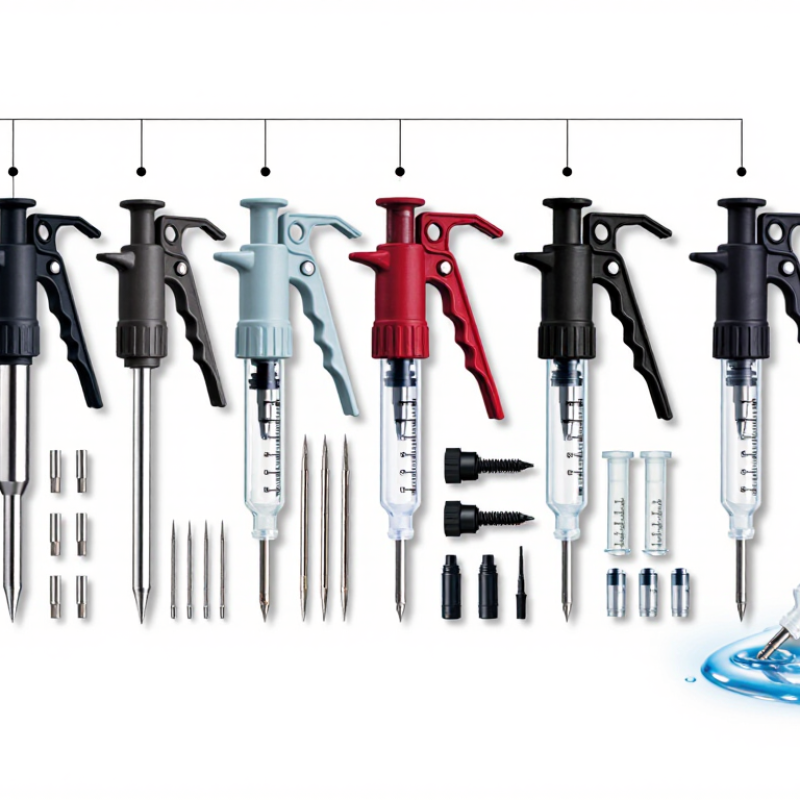
Understanding Chicken Injectors and Their Main Uses
Chicken injectors deliver brine, stock, or thin marinades beneath the skin and into the muscle. This differs from soaking, which mainly seasons the surface. USDA Foreign Agricultural Service’s October 2024 Livestock and Poultry: World Markets and Trade estimated global chicken-meat production at roughly 104 million metric tons for 2024. For buyers, that scale makes consistent seasoning and practical equipment capacity important.
A hand injector suits small batches, recipe trials, and occasional kitchen use. Its barrel should be easy to read, and its plunger should move smoothly without leaking. For larger operations, multi-needle injectors can distribute liquid across many pieces faster. Needle openings matter: thicker mixtures may clog narrow needles, while overly large openings can leave visible marks or uneven pockets. Keep mixtures well strained.
The purpose is controlled distribution, not simply adding more liquid. Use measured recipes, inject evenly, and allow time for seasoning to spread. Cleanable parts and replaceable needles also matter in frequent use. A common buying mistake is choosing capacity before testing the marinade. I would check the actual mixture first. Small differences in salt, herbs, or viscosity can change how an injector performs, and product specifications rarely tell the whole story.
How to Evaluate Chicken Injectors for Global Markets
OECD-FAO Agricultural Outlook 2024-2033 projects global poultry meat production will rise by about 16% over the coming decade. That growth makes injector selection a practical production decision, not just a price comparison. Buyers should match needle count, injection pressure, and throughput to their product and line speed. A machine designed for small batches may struggle during long, continuous shifts. Check the details. Ask suppliers for test results using comparable cuts, brine viscosity, and target pickup rates. Published capacity alone can be misleading.
For international purchasing, verify electrical compatibility, food-contact materials, and access to replacement seals and needles. Confirm that product-contact parts can be removed and cleaned without special tools. A neat specification sheet can still hide a frustrating clean-down. Test it wet. During trials, inspect injection uniformity across breast and thigh meat, then weigh samples before and after processing. Record the results; visual checks alone miss variation. Also request clear operating and maintenance instructions in a language your team can use. No single score tells the whole story. Local water quality, operator training, and service response can change performance after installation, so include them in the evaluation.
How to Evaluate Chicken Injectors for Global Markets
Illustrative buyer-priority weighting across practical purchasing criteria. Percentages are a suggested evaluation framework, not measured market data or ratings of specific products.
Use these criteria to compare injection consistency, usable capacity, cleaning requirements, needle durability, local power or accessory compatibility, and access to replacement parts and warranty support. Adjust the weights to match your production volume and destination market.
Seven Chicken Injectors Compared by Design and Performance
Choosing among seven chicken injectors is easier when design and performance are judged separately. Compare barrel capacity, grip shape, needle length, and how securely each part fits. A clear barrel helps you measure marinade, while a comfortable plunger can reduce hand strain during larger batches. Small details matter.
Single-needle designs offer control around joints and smaller cuts. Multi-hole needles can spread thin marinades faster, but may clog when mixtures contain herbs or coarse spices. Check whether needles detach for cleaning, and look for smooth internal surfaces without hard-to-reach corners. A tight seal also matters: leaking around the plunger wastes marinade and makes handling messy. More features do not always mean better results.
Tips: Strain chunky marinades before injection. Test a small amount first, then inject at several points and wipe the needle between cuts. Compare cleanup time too; it is easy to overlook, and honestly, that can change which injector feels best for regular use.
Choosing an Injector for Home, Catering, or Commercial Use
For home cooking, a compact injector with a clear barrel makes it easier to measure small amounts of marinade and spot trapped air. Catering teams may prefer a larger capacity and removable parts, since repeated refilling slows service. For commercial kitchens, prioritize sturdy construction, a comfortable grip, and needles suited to the meat being prepared. A large injector is not automatically better; it can feel awkward when seasoning a small chicken breast.
Match the needle to the mixture. Fine, strained liquids pass more easily through narrow openings, while herbs or spices can clog them. Test the injector over a tray before working near the prep area. USDA Food Safety and Inspection Service guidance sets poultry’s safe minimum internal temperature at 165°F (74°C). Check the thickest part with a food thermometer; an injector does not replace temperature checks.
For catering and commercial use, cleaning affects both speed and reliability. Choose a design that can be disassembled, then wash and sanitize every food-contact part between batches. The FDA Food Code 2022 sets cold holding at 41°F (5°C) or below and hot holding at 135°F (57°C) or above. These benchmarks matter when injected poultry waits between preparation and service. There is no perfect tool. A needle that cleans quickly may matter more than extra capacity on a busy shift.
Checking Materials, Compatibility, and Maintenance Requirements
A dependable chicken injector should feel sturdy without being awkward to hold. Look for food-contact materials with clear care instructions, such as a corrosion-resistant metal needle and a durable barrel. Check whether seals are replaceable and whether the maker identifies their material. Small details matter. A seal that softens or leaks can make filling and dosing frustrating.
Compatibility depends on both the needle and the marinade. A narrow needle may clog when herbs or pepper flakes are present, while a wider one can leave larger holes in delicate meat. Match the needle opening to your recipe, and check that the barrel holds enough liquid for the amount of poultry you prepare. Graduated markings are useful, but confirm whether they show millilitres, fluid ounces, or both. Buyers can overlook this simple mismatch. For maintenance, choose a design that comes apart without special tools. Rinse promptly after use, then wash the needle, barrel, and seals according to the care guide. Dry everything fully before storage; trapped moisture can encourage corrosion or unpleasant odours.
Tips: Strain chunky marinades before filling. Rinse promptly. Inspect the needle for residue, and replace worn seals rather than forcing a leaking injector to work.
7 Best Chicken Injectors for Global Buyers - Checking Materials, Compatibility, and Maintenance Requirements
| Selection | Recommended Configuration | Typical Capacity | Material Checks | Needle and Compatibility | Maintenance Requirements | Best Suited For |
|---|---|---|---|---|---|---|
| 1. Compact everyday injector | Manual syringe-style injector with a straight, single-outlet needle | About 30 mL | Look for a corrosion-resistant metal needle, a smooth barrel, and a plunger seal intended for food contact. | Usually supplied with one needle. Check that the needle hub matches the syringe connection; fittings are not universally interchangeable. | Disassemble after use, wash the barrel, plunger, and needle promptly, then dry fully. Check the seal for wear. | Small poultry portions, occasional home use, and buyers seeking a compact tool. |
| 2. General-purpose manual injector | Reusable syringe-style injector with a graduated barrel and replaceable straight needle | About 50–60 mL | A stainless-steel needle and a durable, food-contact-compatible barrel and seal are practical choices. Confirm material details with the supplier. | Verify the supplied needle’s bore and hub fit. A finer needle can clog more easily when the marinade contains herbs or spices. | Flush immediately after injecting; remove the needle for cleaning and inspect the seal and connection before storage. | Whole chickens, chicken pieces, and regular kitchen use with smooth marinades. |
| 3. Clear-barrel measuring injector | Manual injector with a transparent, graduated barrel for measuring doses | Commonly about 30–60 mL | Check that the barrel material is suitable for the intended food and cleaning method. Graduations should remain legible after repeated washing. | Needle compatibility depends on the hub design and included fittings. Confirm replacement-needle availability before purchase. | Use a non-abrasive brush if needed. Avoid cleaning methods or temperatures that the barrel and seal manufacturer does not permit. | Buyers who want visible fill levels and repeatable portioning. |
| 4. Multi-needle injector | Injector head with several outlets designed to distribute liquid across a wider area | Varies by syringe or reservoir; check the stated capacity | Inspect every needle and outlet for secure attachment, smooth surfaces, and corrosion resistance. Confirm food-contact suitability for seals and other wetted parts. | Use only the needles and fittings specified for the head. Multiple outlets may require a well-strained, low-viscosity marinade to reduce blockage. | Remove and clean each needle or outlet separately after use. Confirm all passages are clear before drying and reassembly. | Faster coverage of larger poultry pieces when the marinade is smooth and free of large particles. |
| 5. Wide-bore marinade injector | Manual injector paired with a wider-bore needle intended for thicker or finely blended mixtures | Often about 30–60 mL; verify the actual syringe size | Check the needle’s internal passage and the seal’s resistance to the ingredients used. Do not assume every plastic part is suitable for every food or cleaning agent. | Needle bore and hub must match the injector. Strain marinades containing chopped herbs or solids, even when using a wider needle. | Rinse promptly and use a narrow cleaning brush where appropriate. Check for trapped food in the needle and connection. | Thicker, blended marinades that may not flow reliably through a fine needle. |
| 6. Long-reach injector | Manual injector supplied with a longer needle for reaching deeper into thicker cuts | Typically paired with a 30–60 mL syringe; confirm the supplier’s specification | Look for a rigid, corrosion-resistant needle and a secure connection. A longer needle should not bend during normal intended use. | Check needle length, bore, and hub fit against the injector and intended cut. Longer needles need careful handling and storage. | Clean the full needle length immediately after use. Store with a protective cover and inspect for bending or damage. | Thicker chicken cuts or buyers who need to place marinade deeper within the meat. |
| 7. Heavy-duty, disassemblable injector | Reusable manual injector with replaceable parts and a barrel that can be taken apart for cleaning | Commonly about 60–120 mL, depending on the design | Review the material specifications for the barrel, needle, seals, and fittings. Stainless steel grades and food-contact requirements vary by product and destination market. | Confirm the exact connection type and whether compatible replacement needles and seals are available. Do not rely on appearance alone to identify a fitting. | Follow the maker’s disassembly and cleaning instructions. Replace worn seals and damaged needles; dry components fully before storage. | Frequent use, larger batches, or buyers prioritizing repairability and replacement parts. |
Buyer note: These are practical selection profiles, not specifications for particular products. Capacities and fittings vary by model. Before ordering, confirm the exact materials, needle connection, replacement-part availability, and cleaning instructions for the destination market.
