
China Top 10 Permanent Hair Removal Machine Manufacturers
Choosing a Permanent Hair Removal machine manufacturer involves more than comparing prices or polished product photos. Buyers should examine engineering capability, quality controls, service support, and the intended treatment settings. In China, manufacturers vary widely in experience, export readiness, and product specialization. A useful comparison starts with verifiable information, not marketing claims.
This guide introduces ten Chinese manufacturers and considers practical details that matter to clinics, distributors, and equipment buyers. These include available technologies, published specifications, operator training, warranty terms, spare-parts access, and customization options. Ask for clear documentation and arrange a product demonstration when possible. Details matter. A device’s stated energy output, cooling method, and handpiece design can affect daily workflow, but specifications alone do not establish performance. Buyers should also confirm how testing is conducted and whether support remains available after purchase.
The phrase “permanent hair removal” is widely used in the industry, yet individual outcomes can differ. Hair characteristics, treatment plans, equipment settings, and user technique all play a role. That deserves careful review. No manufacturer should be judged solely by a ranking or a single advertised result. Company information and product claims may change, and some details can be difficult to verify independently. Readers should treat this list as a starting point for due diligence, compare evidence across suppliers, and seek qualified guidance before making clinical or purchasing decisions. A closer look may reveal trade-offs that a sales brochure leaves out.
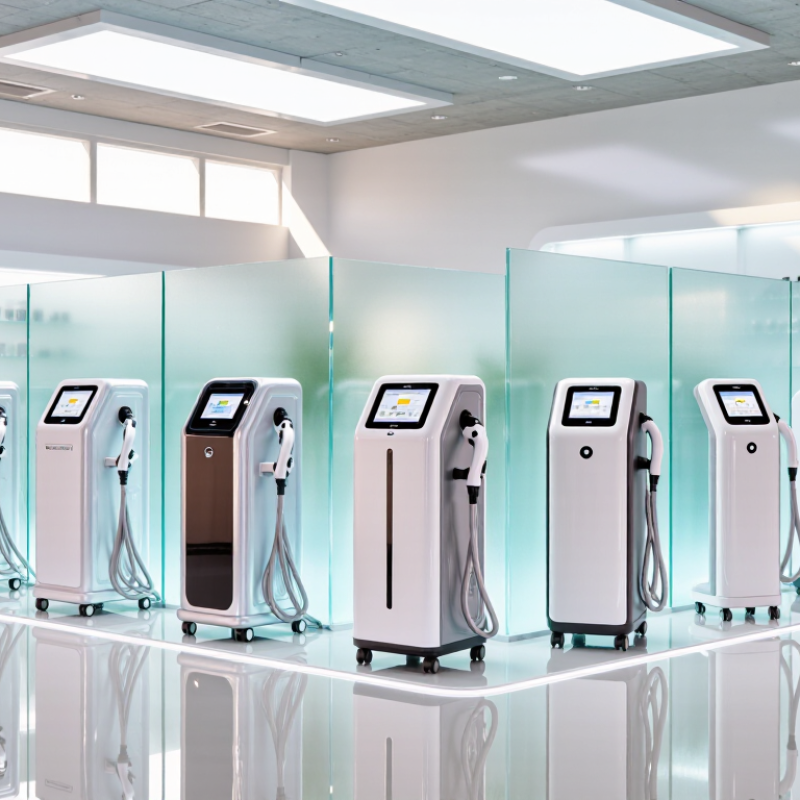
Understanding Permanent Hair Removal Machines and Their Technologies
Permanent hair removal machines use controlled light or electrical energy to damage hair follicles and reduce future growth. Laser systems deliver a focused wavelength absorbed by pigment in the hair shaft. The resulting heat travels toward the follicle. IPL devices use filtered, broad-spectrum pulses, so their output differs from a laser beam. Small distinction, big practical effect. Suitability depends on skin tone, hair color, treatment area, and device settings. Dark hair often responds better because it contains more pigment, while very light hair may respond less reliably.
Laser and IPL usually require multiple visits because hairs grow through different cycles. That’s normal. Cooling contact tips or chilled gel can help protect the skin and improve comfort during treatment. A trained operator should assess skin history, select suitable settings, and test a small patch before treating a larger area. Eye protection matters. So does aftercare, including limiting excess heat and sun exposure for a short period. Electrolysis works differently: a fine probe directs energy into individual follicles, making it useful for varied hair colors, though sessions can take longer. Results vary, and “permanent” does not mean every hair disappears forever. Some regrowth may occur, and maintenance might be needed. One overlooked detail is how accurately a device measures energy output; specifications alone cannot prove consistent performance. That deserves a closer look.
China Top 10 Permanent Hair Removal Machine Manufacturers - Understanding Permanent Hair Removal Machines and Their Technologies
Technology overview only: the entries below are technology types and machine features, not a ranked list of manufacturers. Laser and light-based treatments are generally described as providing permanent hair reduction; results vary by person, treatment settings, and hair-growth cycle.
| Technology or Feature | Typical Wavelength or Design | How It Works | Common Considerations | Practical Evaluation Point |
|---|---|---|---|---|
| Alexandrite laser | 755 nm | Delivers laser energy absorbed by melanin in the hair shaft and follicle. | Often used for lighter skin tones with dark hair. Higher epidermal melanin can increase the risk of unwanted skin effects, so suitability and settings require assessment. | Check that the device allows appropriate pulse, energy, and cooling settings for the intended treatment area and skin type. |
| Diode laser | Commonly about 800–810 nm; specifications vary by system. | Uses a laser wavelength in the near-infrared range to heat melanin-containing hair structures. | Used across a range of skin tones when treatment parameters are selected appropriately. Wavelength alone does not determine safety or effectiveness. | Review the actual wavelength specification, available settings, spot size, and skin-cooling method. |
| Long-pulsed Nd:YAG laser | 1064 nm | Its longer wavelength penetrates relatively deeply and is absorbed less by epidermal melanin than shorter hair-removal laser wavelengths. | Commonly considered for darker skin tones by trained operators. Treatment can be uncomfortable, and correct settings remain important. | Confirm that the device is designed for long-pulsed hair treatment and has suitable pulse-duration and cooling controls. |
| Ruby laser | 694 nm | Targets melanin with a shorter red-light wavelength than alexandrite and diode systems. | Typically better suited to lighter skin and dark hair; greater epidermal melanin absorption can limit use on darker skin tones. | Check intended skin-type indications and whether the technology is appropriate for the planned clinical setting. |
| Intense pulsed light (IPL) | Broad-spectrum, non-laser light; delivered wavelengths depend on the device and filter. | Uses filtered pulses of broad-spectrum light. It is not a single-wavelength laser. | Performance depends on the spectrum, filters, pulse structure, and treatment parameters. IPL suitability is not identical to that of laser systems. | Ask for the filter range and the device-specific treatment guidance rather than relying on the term “IPL” alone. |
| Dual-wavelength laser platform | May combine 755 nm alexandrite and 1064 nm Nd:YAG channels. | Provides access to different laser wavelengths, which can be selected according to the patient and treatment plan. | Having multiple wavelengths does not mean every wavelength is suitable for every person or that they are necessarily delivered simultaneously. | Verify whether wavelengths have separate controls and how the operator selects the appropriate channel. |
| Multi-wavelength diode platform | May list wavelengths such as 755, 808, and 1064 nm; implementation differs by device. | Combines or provides access to several wavelength bands through a diode-based handpiece or platform. | Wavelength labels do not establish the energy contribution, delivery method, or clinical performance of each band. | Request technical documentation describing wavelength output and whether the bands are emitted together or selected separately. |
| In-motion or SHR-style delivery | A delivery approach used with some laser or IPL systems; it does not specify a unique wavelength. | The applicator is moved repeatedly over an area, often using repeated pulses according to the device protocol. | This is a treatment-delivery method, not a separate light source. Operator technique and the device’s instructions remain essential. | Evaluate the underlying light source, pulse controls, treatment protocol, and built-in safety features separately. |
| Contact cooling | Cooling plate or window, often integrated into the treatment handpiece. | Conducts heat away from the skin surface during treatment to help protect the epidermis and improve comfort. | Cooling can reduce discomfort and surface heating but does not remove all treatment risks or replace correct parameter selection. | Check the cooling method, contact consistency, maintenance requirements, and compatibility with the handpiece. |
| Air or cryogen cooling | Uses chilled air or a timed cryogen spray; availability and design vary. | Cools the skin before, during, or after light delivery, depending on the system. | Cooling approaches differ in timing and operation. They are supporting features and do not determine the laser or IPL wavelength. | Confirm the cooling system’s operating instructions and assess it alongside the light source and treatment parameters. |