
How to Choose Custom Cigar Labels for Your Brand
Choosing custom cigar labels means balancing brand recognition, material, and legibility in a small space. A label must feel intentional on the cigar, not merely attractive on a screen. Consider how its colors sit beside the wrapper’s natural shade, and whether the lettering stays clear around a curved band. Details matter. Paper texture, ink finish, and trim precision can change the impression from refined to crowded.
Branding expert Marty Neumeier offers a useful principle: “A brand is not what you say it is. It’s what they say it is.” That idea makes label choices more than decoration. The design should help customers recognize your brand and understand its character without relying on tiny text or visual clutter. Compare uncoated and lightly textured stocks, review proofs under warm and neutral lighting, and check how the label looks at actual size. Test before printing. A mock-up can reveal awkward spacing that a flat digital file hides.
This guide explores the choices behind custom cigar labels, from materials and finishes to typography, color, and production quality. There is no single formula that suits every brand. A glossy finish may sharpen one design but overwhelm another; restraint can be useful, though it is not automatically memorable. Treat each decision as a practical test: does it improve recognition, readability, and consistency? A thoughtful label earns attention through clear choices, not added decoration alone.
Define Your Brand Identity and Label Requirements
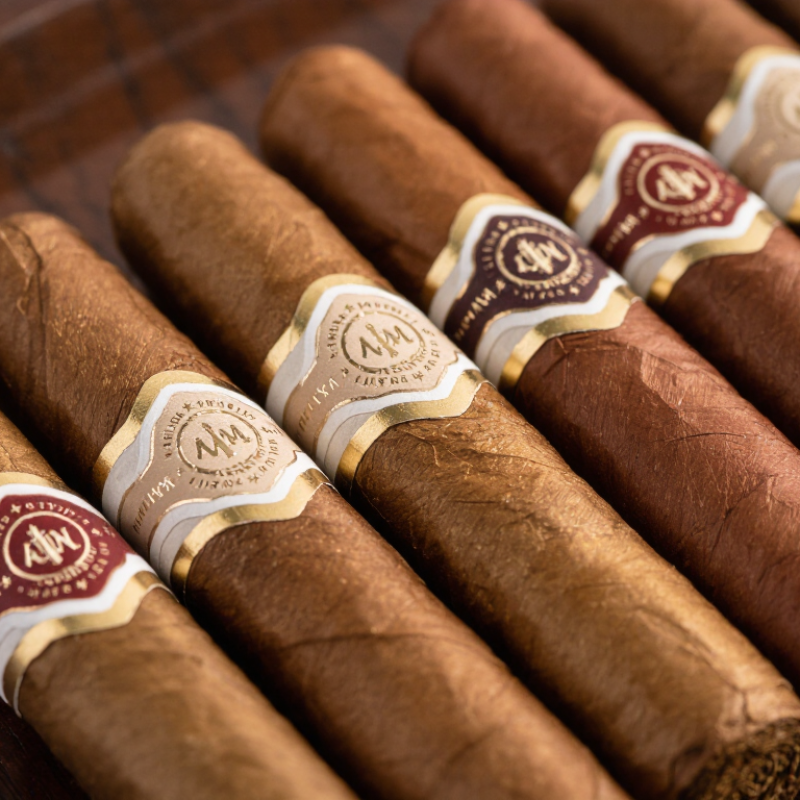
Start with the identity the label must communicate: heritage, craftsmanship, or a contemporary feel. Choose two or three visual cues, such as a restrained color palette, a serif typeface, or a fine-line border. Then check that the name, variant, and essential product details remain readable on the curved surface. Small type can look elegant on screen and disappear in print. A physical mock-up helps.
The label should work at real size. Measure the available area, note the curve and seam, and test how metallic foil or textured stock affects contrast. In WestRock’s 2016 Packaging Matters study, 66% of surveyed consumers said appealing packaging had prompted them to try a new product. That finding concerns packaging broadly, not cigar labels specifically, but it underscores the value of clear visual communication. Keep decoration purposeful.
Consistency matters, too. Lucidpress’s 2019 State of Brand Consistency report associated consistent brand presentation with a reported 23% increase in revenue. Treat that as a broad business finding, not a guarantee for any label. Carry the same colors, typography, and tone across sizes and print runs. Ask a printer for a proof under warm and cool lighting. Then inspect it from arm’s length. I’d avoid polishing every detail until it feels generic; one small irregular touch may better express the intended character. Still, test it.
Choose Label Materials for Cigar Storage Conditions
A cigar label should stay readable through the storage conditions it will actually face. Humidors often maintain high humidity, and small changes in temperature can cause condensation. Paper labels may absorb moisture, curl at the edges, or show ink smudges. A coated or synthetic stock can resist moisture better, but its finish should still suit the brand’s look and feel. Test a sample on the actual wrapper before ordering a full run.
Tips: Place sample labels in a representative storage environment for several days. Check for lifting, fading, and adhesive residue. Try handling them with clean, slightly damp fingers, too.
Adhesive matters as much as the label surface. A strong adhesive may hold in humidity, yet damage a delicate wrapper when removed. Ask the printer about adhesives designed for curved surfaces and test them on the intended material. Keep labels away from direct contact with oils or wet surfaces. One detail is easy to miss: labels can behave differently on textured wrappers. It is not a perfect rule, so test more than one sample and inspect it after storage.
Plan the Label Design and Required Product Information
Plan the label around the information a buyer needs to identify the product, not just the artwork. Set the product name, size, quantity, origin, and producer or importer details in a clear order. Include batch or lot information, health warnings, and other required statements when applicable. Requirements differ by market, so verify the current rules for every place where the product will be sold. A designer’s proof is not a substitute for regulatory review.
Keep essential text readable on the actual package. A cigar band curves around a narrow surface, and small type can become hard to follow near an edge or seam. Small type fails. Test a printed sample under ordinary indoor light, then check it at arm’s length. Use strong contrast and leave enough space between text and decorative borders. A barcode or QR code should sit on a flatter area and remain scannable after printing. Even then, the layout may feel crowded; remove ornament before shrinking required text. Check spelling, translations, and numbers against the approved product records. One overlooked detail can make a polished label confusing.
How to Choose Custom Cigar Labels for Your Brand - Plan the Label Design and Required Product Information
| Planning Area | What to Decide | Example or Practical Guidance | What to Check Before Printing |
|---|---|---|---|
| Label purpose | Choose whether the label is a cigar band, box label, or both. | A band identifies and decorates an individual cigar; a box label can carry product and package details. | Confirm the label’s position, visibility, and application method on the finished product or packaging. |
| Label dimensions | Set dimensions based on the actual cigar or package rather than relying on a universal size. | Measure the cigar’s circumference and the usable band area. Treat any initial dimensions as a prototype, not an industry standard. | Print a physical proof and check overlap, alignment, readability, and clearance from the cigar’s ends. |
| Product identification | Decide how the cigar will be identified on the band and outer packaging. | Use a clear product or line name and, where useful, a specific size or variant description. | Keep names and variant details consistent across the label, box, product records, and sales materials. |
| Product specifications | Select factual details that help distinguish the cigar. | Possible details include length, ring gauge, wrapper type, and tobacco origins, when verified and appropriate for the market. | Verify specifications with product records. Avoid unsupported claims about origin, ingredients, or characteristics. |
| Required information | Identify the information required for each destination market and package type. | Requirements may include applicable health warnings, responsible-party details, country-of-origin statements, or other prescribed information, depending on jurisdiction. | Check current rules with the relevant regulator or qualified compliance adviser before approving artwork. Requirements are not the same in every market. |
| Warning placement | Plan space for any warning text or graphic required in the sales market. | Warning wording, size, placement, and presentation can be regulated and may depend on the product and package. | Use the current official wording and layout rules; do not treat a decorative cigar band as a substitute for required package labeling. |
| Typography and readability | Choose typefaces, text sizes, and contrast that remain legible at final print size. | Use a simple typeface for small details and reserve decorative lettering for short display text. | Review a full-size proof under ordinary lighting and confirm that all required text meets applicable legibility rules. |
| Color and artwork | Set a restrained color palette and a visual style that suits the product and print process. | High contrast helps small text stand out; metallic inks, foil, and embossing can add detail but may affect cost and production tolerances. | Request printer specifications for color mode, bleed, safe areas, foil layers, and minimum line or type sizes. |
| Material and adhesive | Choose stock and adhesive that suit the cigar surface, storage conditions, and application process. | Paper stocks and finishes vary in texture, flexibility, and resistance to handling; confirm compatibility with the intended use. | Test samples for secure application, clean removal if needed, and resistance to expected humidity and handling. |
| Final artwork approval | Approve one controlled artwork file for each product and market version. | Check spelling, measurements, product details, warnings, and version dates against approved source information. | Keep a signed proof and final production file; recheck the label whenever product details or regulations change. |
Compare Printing Methods and Finishing Options
A custom cigar label should fit the wrapper’s curve without buckling or covering important details. Start by checking the label size, paper stock, and surface texture against the actual packaging. A small sample can reveal problems that look invisible on screen, such as fine type closing up or colors shifting on textured paper.
Digital printing is practical for short runs, frequent design changes, and testing several versions. Small runs suit digital. Flexographic printing can be cost-effective at higher volumes, though setup and plate costs may make tiny orders less appealing. Offset printing can handle fine detail and consistent color, but the best choice depends on quantity, stock, and schedule. Ask for a printed proof, and compare it under the lighting where the product will be displayed.
Finishing changes both appearance and handling. Foil stamping adds reflective accents; embossing raises details you can feel. Matte varnish reduces glare, while gloss can make colors look more vivid. A shiny finish may hide small lettering under bright light, a trade-off that is easy to miss. Test before committing. Check whether the finish scuffs, wrinkles, or lifts at the label edge after application. I would not assume the most elaborate option is automatically the strongest choice; sometimes a simpler finish reads more clearly, though it can feel less distinctive.
Review Samples and Select a Reliable Label Supplier
When choosing custom cigar labels, do not judge a supplier by a screen proof alone. Request physical samples on the same stock and finish you plan to order. Check small type, edge sharpness, color consistency, and how the label sits on a curved surface. View it under warm indoor light. A glossy finish can look striking, but it may hide fine details or show fingerprints. Ask for a sample using your own artwork; generic swatches reveal less.
A dependable supplier should explain material options, proofing steps, minimum quantities, and realistic production timelines in plain language. Ask how they check color and adhesive consistency across a batch, and what happens if a sample differs from the approved proof. Clear answers matter. Keep approvals and final specifications together. One detail is easy to miss: a label that looks perfect when flat may wrinkle slightly around a curve. Recheck it before placing a larger order.
Tips: Compare two finishes side by side. Test adhesion after gentle handling. Request a revised proof when anything feels uncertain. It is tempting to dismiss a tiny color shift, but repeated across a full set, it may look uneven. Extra review takes time, and sometimes it catches something small but important.
