How to Choose the Best Construction Truck for Your Needs?
Choosing the right Construction Truck can significantly impact your project's success. With various options available, it’s crucial to assess your specific needs. A construction truck should align with the requirements of your tasks and site conditions.
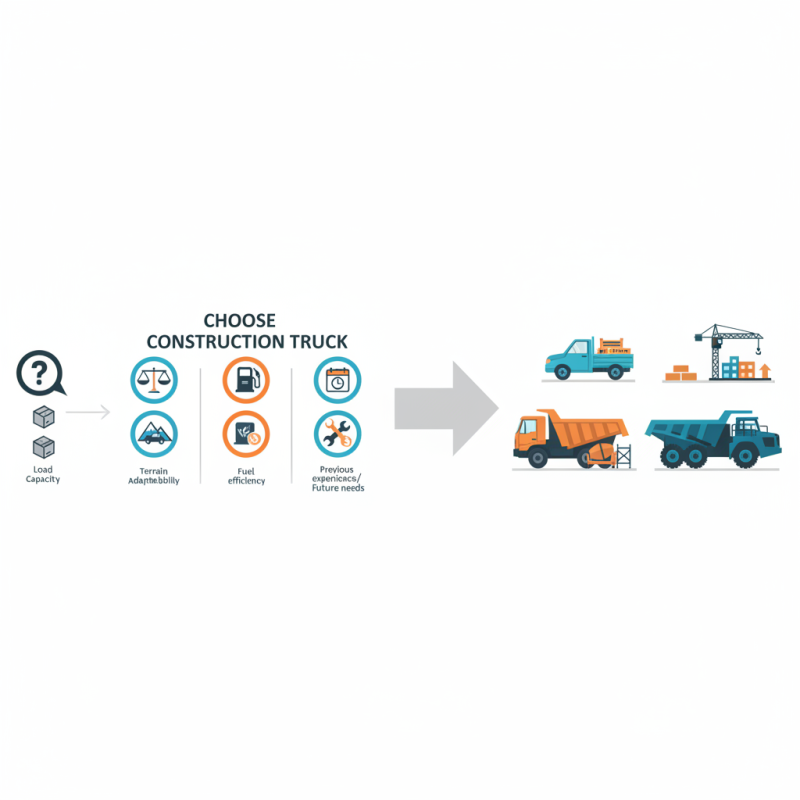
Consider the load capacity, engine power, and terrain adaptability when selecting a construction truck. Each project presents unique challenges, and not every truck will fulfill these needs. For example, a lightweight truck might be sufficient for small sites, while a heavy-duty option is essential for larger projects.
Think about fuel efficiency and maintenance costs too. These factors influence long-term budget planning. A reliable construction truck should help you avoid unexpected downtime. Reflecting on previous experiences can guide you in making the best choice. Sometimes, what worked before may not fit future needs, prompting deeper consideration of your selection.
Understanding Your Specific Construction Needs
When choosing the best construction truck, understanding your specific needs is crucial. Each construction project is unique. Factors such as load capacity, terrain, and transport distance will influence your decision. Identify the materials you will be hauling. Will you need to transport sand, gravel, or heavy machinery? This will determine the truck's specifications.
Consider the types of jobs you frequently take on. A truck designed for urban construction might not perform well on rough terrain. Assess the average weight of your loads too. Picking a truck with insufficient capacity leads to breakdowns. Be aware of fuel efficiency as well. A more efficient vehicle can save you money long-term.
Reflect on your team's experience with different trucks. Sometimes, the newest model isn't the best fit. Older trucks often have proven reliability. Seek input from your crew about what features matter most to them. They might highlight aspects you hadn't considered. Understanding their perspective can lead you to a better choice. Identifying your precise needs ensures you select a truck that enhances productivity on your sites.
Assessing Different Types of Construction Trucks
When it comes to assessing different types of construction trucks, size and capacity play crucial roles. Larger trucks may accommodate hefty loads, but they can also be cumbersome. Smaller trucks, on the other hand, are easier to maneuver but may lack the strength for heavy duties. Consider your typical job site. Is space limited, or do you have ample room? This will guide your decision.
Another vital aspect is the terrain. Some trucks excel in rugged conditions, while others are better suited for paved surfaces. If your work frequently involves dirt roads or construction sites, opt for a truck designed for off-road capabilities. However, these trucks often consume more fuel and can be less efficient on highways.
Budgeting is also essential. Higher capacity often means higher costs, both for purchase and maintenance. Do you really need that extra capacity? Reflect on your typical workloads and choose wisely. A truck that is too powerful may lead to unnecessary expenses. A well-balanced choice will not only serve your immediate needs but also provide long-term value.
Evaluating Load Capacity and Vehicle Specifications
When choosing a construction truck, evaluating load capacity and vehicle specifications is crucial. Industry reports, such as those from the American Trucking Association, indicate that trucks can vary significantly in their weight limits. For example, light-duty trucks typically have a load capacity ranging from 6,000 to 10,000 pounds. In contrast, medium-duty trucks can handle up to 26,000 pounds. It’s essential to select a truck that can meet job-specific demands.
Consider the cargo you plan to transport. If you frequently haul heavy materials, a truck with a higher payload capacity is necessary. Analyze the bed size and material as well. Steel beds offer durability, while aluminum beds provide lighter weight. Always check the Gross Vehicle Weight Rating (GVWR) as it impacts overall safety and performance. Pay attention to suspension systems, too, since they affect load distribution and driving comfort.
Tip: Always calculate the estimated weight of your loads before deciding on a truck. This prevents overloading and extends vehicle lifespan.
Furthermore, many construction trucks come with optional features that can enhance functionality. Hydraulic lifts, for instance, may be beneficial for easily loading equipment. However, while these features add convenience, they also drive up maintenance costs. Assess whether the added value aligns with your usage patterns and budget. Engaging in this thoughtful evaluation process will lead you to a more informed and satisfying purchase decision.
Considering Terrain and Driving Conditions
When selecting a construction truck, consider the terrain and driving conditions you'll face. Rocky landscapes demand robust suspension systems. Steep hills require powerful engines for towing. A truck suited for flat, paved roads might struggle off-road. Each environment presents unique challenges.
Think about the climate too. Rain and mud can make driving hazardous. Trucks with excellent traction control are essential. In snowy areas, four-wheel drive options are beneficial. Dry, sandy terrain might not require as much grip but demands a truck with good weight distribution.
Reflect on your daily tasks. If you often drive on rough, unpaved paths, a heavy-duty truck with all-terrain capabilities might be necessary. Smooth highways might allow for a lighter, more fuel-efficient model. Each choice influences performance and efficiency. Consider your specific needs and how the environment shapes them.
Budgeting for Purchase and Maintenance Costs
Budgeting for a construction truck involves several critical considerations. Start with the initial purchase price. Trucks vary widely in cost, influenced by size, model, and features. A robust vehicle suited for heavy-duty tasks will often cost more upfront. Factor in how this aligns with your budget. Occasionally, cheaper options can lead to expensive repairs down the line.
Maintenance costs can be tricky. Regular service, tire replacements, and unexpected repairs can accumulate. Older trucks may require more frequent visits to the mechanic. Breakdowns can halt your projects and incur extra costs. Assessing the reliability and durability of a truck can save money over time.
Fuel efficiency is another key factor. Trucks that consume less fuel can dramatically reduce operating costs. While they may be pricier initially, the savings can outweigh the costs. Keep in mind that your needs may change. It's essential to have a flexible budget that can adapt as your project demands evolve. Consider these variables to make an informed decision.