How to Choose the Best Landscaping Products?
Choosing the right Landscaping Products begins with the place they need to serve. A sunny patio, a shaded border, and a sloped lawn each ask for different materials. Before comparing brands, note the soil, drainage, exposure, and amount of foot traffic. These details can prevent costly mismatches, such as edging that shifts after heavy rain or a surface that becomes slippery in shade.
Landscaping-products specialist Elena Brooks offers a useful rule: “Choose for the site, not the showroom.” Treat that as a starting point, not a guarantee. Check product specifications, installation requirements, maintenance needs, and warranty terms. For example, compare how paving samples feel underfoot when wet, and inspect the weight and finish of edging before ordering. Ask suppliers for technical data when claims seem vague. Small checks matter.
Good choices also reflect how you actually use the space. A family path may need durable, easy-to-clean materials, while a quiet planting bed may call for understated borders. Consider long-term upkeep, too: attractive timber can need regular sealing, while some alternatives may weather differently than expected. No product is perfect. And preferences change. I would not choose from a photograph alone; colors and textures can look different in daylight. This guide explains how to compare quality, fit, sustainability, and value, so your final selection suits both the landscape and the people who use it.
Map Climate Fit: USDA Hardiness Zones Span 13 Bands, Each 10°F Wide
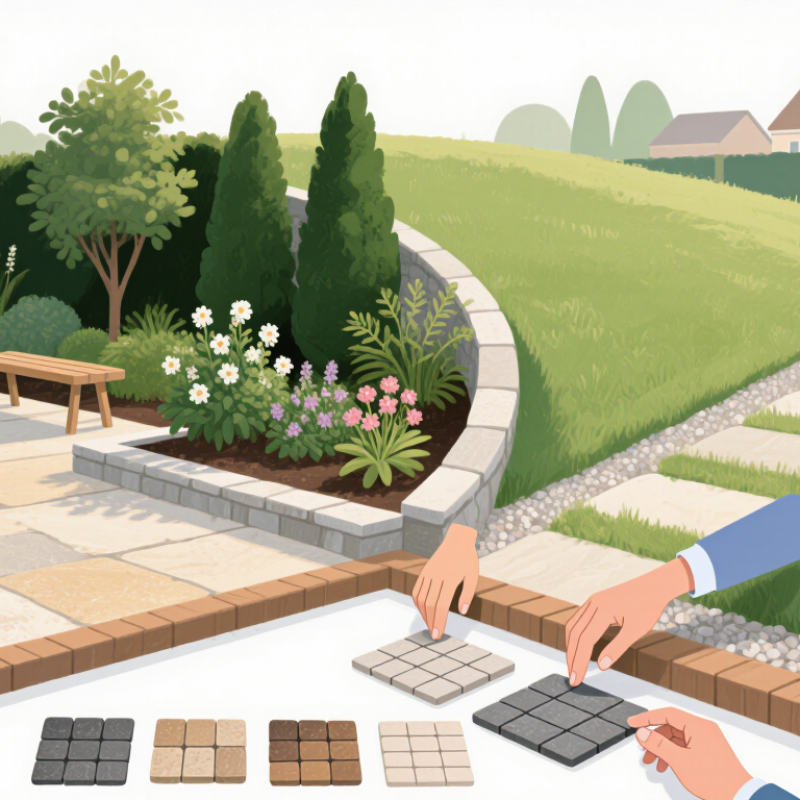
The USDA Plant Hardiness Zone Map divides the United States into 13 zones, each spanning 10°F in average annual extreme minimum winter temperature. The USDA Agricultural Research Service’s 2023 map uses climate data from 1991–2020 and splits each zone into 5°F half-zones. Check the full zone on a plant label before buying trees, shrubs, or perennial mixes. A plant listed for Zone 6 may struggle at a colder Zone 5 site, even if the garden center is nearby.
Zones are a filter, not a guarantee. They describe winter cold, not summer heat, rainfall, soil drainage, or wind exposure. A south-facing wall can warm a bed, while a low spot may collect frost. It is easy to overread the map. For a useful local check, compare the USDA zone with NOAA’s 1991–2020 Climate Normals and observe where snow lingers or spring soil stays wet. Match plant products to both the zone and those site conditions; use separate specifications for hardscape or irrigation materials. A little uncertainty remains. Microclimates can surprise you.
Test Soil Before Buying Amendments: Most Turfgrass Prefers pH 6.0–7.0
Before buying lime, sulfur, or a “soil conditioner,” test the soil. Most turfgrass grows well between pH 6.0 and 7.0, according to Penn State Extension’s turfgrass soil-testing guidance. A reading outside that range does not automatically mean you need an amendment. Grass type, soil texture, and existing nutrients also matter.
Collect small samples from several lawn areas at a consistent depth, avoiding thatch and spots beside driveways. Mix them in a clean container and send the sample to a soil-testing laboratory. Small differences matter. University of Massachusetts Amherst’s soil-testing laboratory uses soil and buffer pH to determine lime recommendations; that is more useful than guessing from pH alone. Follow the lab’s rate for your lawn’s area, rather than applying a bag’s general rate.
I have seen the tempting shortcut: spread lime because the lawn looks pale. But pale blades can point to several problems, and excess lime can make nutrients less available. Testing is not perfect; samples can miss uneven patches, and lawns change over time. Still, a measured result is a better starting point than buying amendments first. Check the laboratory’s recommendations before treating the whole yard.
Prioritize Water Efficiency: Outdoor Use Is Nearly 30% of U.S. Household Water (EPA)
Outdoor water use accounts for nearly 30% of household water in the United States, according to the EPA. The share varies by climate, season, and household, but it can rise sharply during hot, dry weeks. That adds up. When choosing landscaping products, look for ways to reduce water loss before adding more irrigation. A rain sensor can pause a sprinkler after a storm, while drip lines deliver water near plant roots. Check that fittings connect securely; a slow leak can waste water without making a visible puddle.
Mulch helps soil hold moisture, and a simple rain gauge can show whether beds actually need watering. Choose products that suit your yard’s slope, soil, and plants, not just their advertised efficiency. Sandy soil may need shorter, more frequent watering, while clay can stay wet longer. I’ve found that a timer is convenient, but it can still water needlessly if its schedule is never adjusted. That part is easy to overlook. Test a small area, watch how quickly the soil dries, and change settings as the weather shifts. A little trial and error is normal.
How to Choose the Best Landscaping Products? — Prioritize Water Efficiency: Outdoor Use Is Nearly 30% of U.S. Household Water (EPA)
Outdoor water use accounts for nearly 30% of average U.S. household water use, and as much as 50% of irrigation water can be lost through evaporation, wind, or runoff. Use these evidence-based criteria to compare landscaping products.
| Product category | Relevant water-use data | What to prioritize | Best suited for |
|---|---|---|---|
| Weather-based irrigation controller | Adjusts watering schedules using local weather and landscape conditions. Savings vary with the existing schedule, climate, and installation. | Choose a controller that adjusts schedules automatically and can be configured for different watering zones. | Properties with automatic irrigation and changing seasonal conditions. |
| Soil-moisture-based controller | Uses soil moisture information to determine whether watering is needed; there is no single nationwide savings percentage for every site. | Check that the system can respond to soil conditions in the areas it controls. | Landscapes where soil moisture differs between zones or rainfall is variable. |
| Rain or soil-moisture sensor | Can prevent scheduled irrigation when rainfall has occurred or the soil already contains sufficient moisture; savings depend on local weather and system settings. | Confirm compatibility with the irrigation controller and follow installation and calibration instructions. | Existing automatic sprinkler systems that run on fixed schedules. |
| Water-efficient spray sprinkler body | EPA WaterSense specifications require labeled spray sprinkler bodies to be at least 20% more water-efficient than standard models. | Look for WaterSense certification and match spray patterns and pressure to the landscape area. | Lawn and planting areas that need spray irrigation. |
| Drip or micro-irrigation equipment | Delivers water near plant roots. Actual water use depends on layout, emitter flow, run time, soil, and maintenance; no single savings rate applies to all installations. | Select emitters suited to plant water needs and check for leaks, clogs, and excessive run time. | Garden beds, shrubs, containers, and other defined planting areas. |
| Mulch | A surface layer helps reduce evaporation from soil; the amount of water saved varies with material, depth, weather, and site conditions. | Choose a suitable mulch and keep it clear of plant stems and tree trunks. | Planting beds and areas where exposed soil dries quickly. |
| Native or climate-adapted plants | Water needs vary by species, climate, establishment stage, and site. Plants suited to local conditions may need less supplemental irrigation once established. | Choose plants suited to local rainfall, soil, sun exposure, and the intended landscape use. | New or renovated landscapes where plant choice can be planned from the start. |
Sources: U.S. EPA WaterSense — Outdoors; U.S. EPA WaterSense — Spray Sprinkler Bodies. Water savings depend on local conditions, product selection, installation, and use.
Compare Smart Irrigation: WaterSense Estimates 7,600 Gallons Saved per Home Annually
Smart irrigation can make a measurable difference: an efficiency estimate puts potential savings at about 7,600 gallons per home each year. That is roughly enough water to fill a small backyard pool. The figure is an estimate, not a promise. Local rainfall, yard size, soil, and existing watering habits all affect the result.
When comparing systems, look for weather-based scheduling or soil-moisture sensing. These features can pause watering after rain or when the ground is already damp. Check that the controller works with your existing valves, and inspect the sensor placement before buying. A sensor buried in dry, exposed soil may give poor readings. Small detail, big difference.
Irrigation upgrades still need attention. Walk the yard during a watering cycle and watch for overspray on sidewalks, dripping connections, or soggy patches near shrubs. Adjusting sprinkler heads and fixing leaks can matter as much as the controller itself. I would not choose a system based on the annual savings number alone; it is useful, but real yards are less tidy than estimates. Compare installation needs, seasonal controls, and whether you can easily change the schedule when plants or weather change.
Check Product Standards and Lifespan: Verify ASTM/ANSI Ratings and Warranty Terms
Before buying landscaping materials, check whether the product cites an ASTM or ANSI standard that actually applies to its use. A standards reference is meaningful only when the product category and test method match your project. Ask for the technical sheet or test documentation, not just a number printed on a package. A paver, for example, may be tested for water absorption, strength, or freeze-thaw performance. A drainage product may need different evidence. Some products have no relevant standard. That matters.
Read the warranty before comparing prices. Check its length, what defects it covers, and whether installation or maintenance conditions apply. A long warranty may exclude damage from poor drainage, ground movement, or harsh cleaning. Keep receipts and installation records; a dated photo of the finished work can help, too. Lifespan still depends on site conditions, upkeep, and correct installation. I once focused too much on the stated service life and too little on the warranty’s exclusions. Not a clever shortcut. Ask the seller to clarify any vague terms in writing, especially what “normal use” means and who handles a claim.
How to Choose the Best Landscaping Products? Check Product Standards and Lifespan
ASTM C936/C936M compressive-strength requirements for concrete interlocking paving units
ASTM C936/C936M specifies an average compressive strength of at least 8,000 psi, with no individual unit below 7,200 psi. These requirements apply to products covered by this standard; they do not guarantee a product’s lifespan. Check the product’s test documentation and read the written warranty for its coverage, exclusions, and duration.
Related Posts
-
Unleashing the Power of Chinese Manufacturing in Best Landscaping Rock Solutions
-
Top 5 Landscaping Rock Options for Your Garden Design?
-
Innovative Trends in Landscaping and Concrete for 2025 The Ultimate Guide for Global Buyers
-

10 Best Gravel Delivery Services for Bulk Orders?
-
How to Buy Bulk River Rock for Your Projects Effectively?
-

Top Quality Concrete Suppliers for Global Buyers