How to Choose the Best Recessed Downlight in 2026?
Choosing the best Recessed Downlight in 2026 requires more than comparing wattage and price. A ceiling can look bright yet feel uncomfortable. Glare may appear on a television screen, while poor color quality can make wood flooring look gray. The right fitting should balance beam angle, brightness, color temperature, dimming performance, and visual comfort.
Lighting designer Thomas E. Farin once said, “Light is the first element of design; without it, there is no color, form, or texture.” His observation remains highly relevant. A quality Recessed Downlight should reveal textures clearly, support daily activities, and avoid harsh shadows. For living rooms, many homeowners prefer warm light around 2700K to 3000K. Kitchens and work areas may benefit from slightly cooler options. Even so, personal comfort matters more than a rigid rule.
This guide examines the practical details behind a confident purchase. We will compare lumen output, beam spread, CRI, glare control, insulation contact ratings, airtight construction, and smart dimming compatibility. Manufacturer testing and recognized safety certifications deserve close attention. Local electrical requirements should also be checked before installation.
No checklist is perfect. I have seen expensive downlights perform poorly because their dimmer was incompatible. I have also seen modest fixtures create a beautiful, even ceiling. Small details matter. A narrow beam can highlight artwork, but it may create bright spots across a plain ceiling. The best choice depends on the room, mounting depth, ceiling material, and how people actually use the space.
Understanding Recessed Downlight Types and Their Main Applications
How to Choose the Best Recessed Downlight in 2026?
Understanding Recessed Downlight Types and Their Main Applications
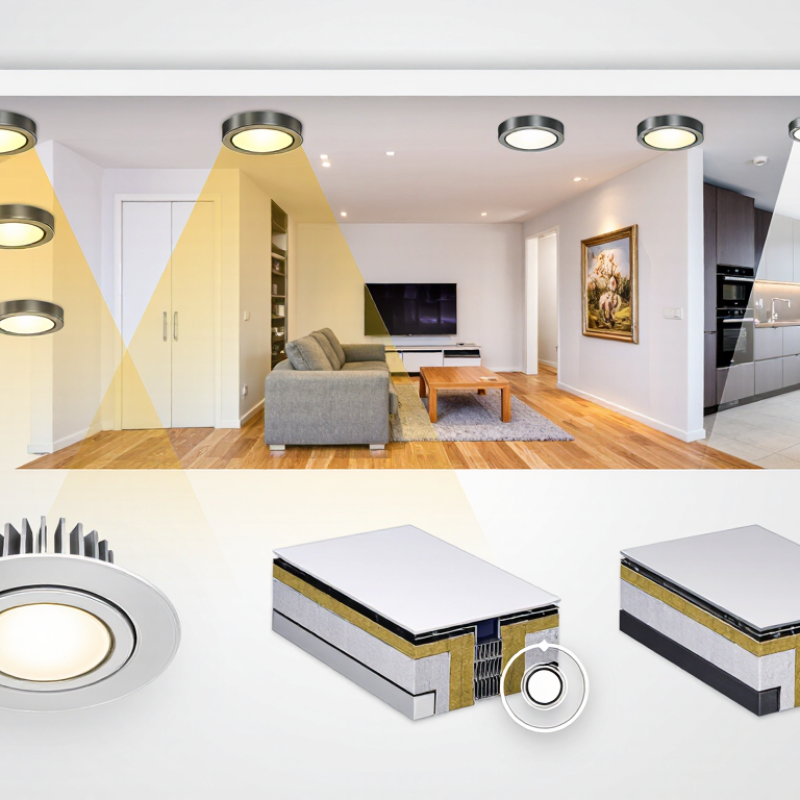
Choosing a recessed downlight starts with its beam direction and installation purpose. Fixed downlights send light straight down, making them suitable for bedrooms, corridors, and general ceiling lighting. Adjustable downlights use a tilting mechanism. They can highlight artwork, kitchen worktops, or display shelves without changing the ceiling layout. Wall-wash models spread light across vertical surfaces. They work well in galleries, retail interiors, and living rooms where a softer atmosphere matters.
Moisture-resistant downlights are designed for bathrooms, laundry areas, and covered outdoor ceilings. Check the IP rating before installation. The correct rating depends on the distance from water sources and local electrical requirements. Fire-rated housings may be necessary in ceilings between floors. In commercial spaces, low-glare optics can reduce reflections on computer screens. For homes, a color temperature between 2700K and 3500K often feels comfortable, while high color rendering helps reveal natural food and fabric colors.
Real-world selection also depends on ceiling depth, insulation, dimming compatibility, and maintenance access. A slim fixture may solve a shallow-ceiling problem, but it can produce more glare if the optics are weak. That trade-off is easy to miss. I have seen carefully spaced lights create dark corners because the beam angle was too narrow. Sometimes, fewer fittings with wider beams look more balanced. Review the room after installation, not only on paper.
Checking Energy Efficiency, Dimming, and Smart Lighting Features
How to Choose the Best Recessed Downlight in 2026?
Energy efficiency should be checked beyond the wattage printed on the box. The U.S. Environmental Protection Agency’s ENERGY STAR data reports that LED lighting uses at least 75% less energy and lasts up to 25 times longer than incandescent lighting. Look for high efficacy, measured in lumens per watt. A practical target is 90 lumens per watt or higher. Also check the light’s power factor and standby consumption.
Dimming performance matters in real rooms. A downlight may dim smoothly at 100%, yet flicker near 10%. Test it beside a desk, not only in a showroom. Confirm compatibility with the installed dimmer, minimum load, and dimming method. The U.S. Department of Energy notes that controls can significantly reduce lighting energy use, but savings depend on occupancy and user behavior. Perfect figures are not guaranteed.
Smart features can improve control, especially with occupancy sensing, schedules, and daylight response. The International Energy Agency estimates lighting uses roughly 10% of global electricity demand, making automated control worth examining. Choose systems that support local operation when internet service fails. Check color rendering, color temperature, and visible flicker before installation. I once underestimated glare from a narrow beam; the ceiling looked elegant, but the work surface felt harsh. That mistake still influences my testing.
Evaluating Size, Trim Style, Installation Method, and Ceiling Compatibility
In 2026, choose the aperture before judging brightness. A 3-inch downlight suits hallways and shelving, while 4- or 6-inch units spread light more evenly. Measure joist spacing, ceiling thickness, and insulation depth before ordering. The IEA estimates that lighting uses about 15% of global electricity. DOE reports that LEDs use at least 75% less energy than incandescent lamps. They can also last up to 25 times longer. DOE’s Solid-State Lighting R&D Opportunities report continues to prioritize efficacy, quality, and controllability.
Trim style changes visual comfort. Baffle trims reduce glare, while reflector trims direct more light onto worktops. Adjustable gimbals help artwork, but deeper housings may conflict with shallow ceilings. New-construction installations offer stable positioning. Remodeling wafers fit between joists with less cutting. I have seen “universal” models fail when insulation touched non-rated housings. Select IC-rated fixtures for insulated ceilings, and verify airtight requirements under local code. Check junction-box access too.
Ceiling material deserves equal attention. Drywall, plaster, wood, and concrete need different clips, brackets, or anchors. Concrete may require surface conduit or a suitable junction solution, not a standard spring clip. ENERGY STAR criteria evaluate efficiency, color quality, lifetime, and dimming compatibility. Do not judge by lumens alone. I still leave a small margin for error. Ceilings shift, cutouts wander, and advertised dimensions can be optimistic. A sample fitting is worth the extra trip.
Reviewing Safety Ratings, Durability, Warranty, and Total Cost
Choosing the best recessed downlight in 2026 requires more than comparing brightness and color temperature. Safety comes first. Check for insulation-contact approval, airtight construction, and suitability for damp or wet locations. A bathroom ceiling needs different protection from a dry bedroom ceiling. Fire-rated housings may also be necessary where local building rules require them. Confirm each marking with a recognized testing laboratory. Do not trust vague packaging claims.
Durability depends on heat management, lens quality, driver performance, and installation conditions. A metal housing usually handles heat better than thin plastic. Look for stable output, flicker control, and a rated lifespan supported by testing data. Warranty terms deserve careful reading. Check coverage length, labor exclusions, replacement procedures, and proof-of-purchase requirements. A long warranty sounds reassuring, but difficult claims can reduce its practical value. Small detail, big difference.
Total cost includes more than the fixture price. Add labor, compatible dimmers, junction boxes, trims, future replacements, and electricity use. An inexpensive light may need earlier replacement or create installation problems. Measure the ceiling opening before ordering. I once underestimated that step, and matching the cutout became expensive. Energy savings also depend on operating hours, not just wattage. Compare delivered light, safety compliance, warranty support, and expected maintenance together. The cheapest option is rarely the cheapest installation.
How to Choose the Best Recessed Downlight in 2026?
Compare the standardized protection levels shown in common IP codes. The first digit measures protection against solid particles, while the second digit measures protection against water. A higher IP number does not automatically mean better performance; select the rating that matches the installation location.
Selection checklist: Verify compliance with the applicable luminaire safety standard, such as IEC 60598-1 and IEC 60598-2-2, confirm the correct insulation-contact or fire-safety rating for the ceiling construction, and review the LED module’s rated life. A longer warranty can reduce replacement risk, but the total cost should also include energy use, installation, maintenance, and possible driver replacement.
Total-cost formula: purchase price + installation + electricity consumption over the expected service life + maintenance or replacement costs. For wet areas, choose a suitable IP rating and confirm that the complete downlight assembly—not only the front trim—has the stated protection level.