
top of page

China Top Capsule Cabin Manufacturers for Global Buyers?

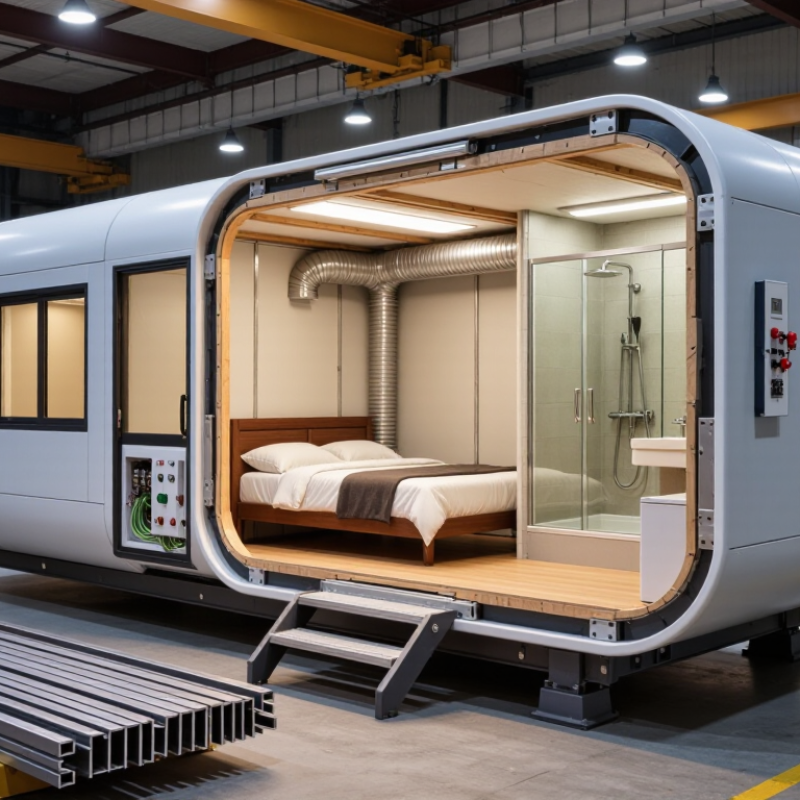
China has become a significant manufacturing base for compact hospitality units, including the Capsule Cabin. Global buyers can find modular designs, competitive pricing, and flexible customization through experienced Chinese suppliers. Yet attractive renderings do not guarantee reliable performance. That distinction matters.

A capable manufacturer should explain its steel structure, insulation layers, waterproofing methods, electrical system, and ventilation design. Buyers should request factory photographs, material specifications, production samples, and independent inspection records. Fire safety, structural loading, sanitation, and electrical compliance must be checked against the destination market’s requirements. Certifications may differ between countries. One certificate rarely proves everything.

The most dependable suppliers communicate clearly about lead times, packaging, installation, spare parts, and after-sales support. A practical evaluation may include a factory audit, sample-room inspection, and third-party quality testing before full production. Look closely at door seals, window joints, bathroom drainage, and interior condensation. Small weaknesses become expensive problems in remote resorts. Very expensive problems.

Price remains important, but it should not replace lifecycle thinking. A cheaper Capsule Cabin may require stronger foundations, more frequent repairs, or costly modifications after arrival. Some manufacturers also present impressive customization options without explaining engineering limits. Buyers should ask difficult questions and record every agreed specification. The best partnership is not always the fastest or cheapest. It is the one supported by verifiable evidence, consistent communication, and a realistic understanding of local construction conditions. Even careful buyers may overlook something, so independent professional review remains worthwhile.
China Top Capsule Cabin Manufacturers for Global Buyers?

What Are Capsule Cabins and Why Choose Chinese Manufacturers?

What Are Capsule Cabins and Why Choose Chinese Manufacturers?

Capsule cabins are compact, prefabricated sleeping units designed for hotels, hostels, airports, campsites, and short-stay properties. A typical unit may include a bed, reading light, ventilation, power sockets, storage, and acoustic panels. Some models also provide private bathrooms. Their controlled dimensions support faster installation and more predictable space planning.

The global modular construction market was valued at about USD 91.8 billion in 2022, according to Grand View Research. The report also projects continued growth through 2030, driven by factory production and shorter construction schedules. This trend supports capsule cabins, although the cabin segment is measured differently across reports. Buyers should not treat every market forecast as directly comparable.

Chinese manufacturers attract global buyers through mature supply chains for steel frames, insulation, electrical components, and interior panels. Factory production can reduce material waste and simplify repeated customization. A buyer may request a 2.1-meter sleeping module, washable wall surfaces, low-noise ventilation, and concealed wiring before production begins. Quality inspections should verify load strength, moisture resistance, emergency access, and electrical safety. International standards still require local review.

Experience matters. A low quotation can hide weak insulation or difficult replacement parts. One overlooked detail is maintenance access. If technicians cannot reach the fan or socket, a compact cabin becomes expensive to operate. Chinese production is efficient, but not automatically perfect. Clear drawings, sample testing, and independent inspection remain necessary.

China Capsule Cabin Manufacturing: Typical Space Ranges by Cabin Type

Capsule cabins are compact, prefabricated accommodation units designed for efficient installation, transport and customization. Chinese manufacturers are widely considered for their integrated supply chains, flexible production capacity and ability to offer modular configurations for hospitality, tourism and temporary accommodation projects.

The chart shows indicative floor-area ranges commonly used in modular accommodation specifications. Actual dimensions vary according to insulation, bathroom facilities, furniture layout, local building codes and project requirements.

How to Evaluate China’s Leading Capsule Cabin Manufacturers

Evaluating China’s leading capsule cabin manufacturers requires more than comparing catalog prices. A serious review starts with factory capacity, engineering records, and export experience. Ask for production photographs, material certificates, and recent inspection reports. A clean showroom proves little. A traceable production line proves more.

The International Energy Agency reported that buildings consumed about 30% of global final energy in 2022. This makes insulation, ventilation, and heat-loss testing important purchasing criteria. Check wall thickness, fire-rated materials, window performance, and electrical protection. Request test results from accredited laboratories, not only internal declarations. Manufacturers should also explain how cabins meet the destination country’s building, transport, and installation requirements. Local compliance cannot be improvised at the port.

Look closely at the details.

The UN Environment Programme’s 2023 Global Status Report for Buildings and Construction highlighted the sector’s substantial carbon impact. Therefore, evaluate steel content, insulation recyclability, packaging, and expected service life. Ask whether replacement panels, seals, and wiring remain available after installation. A strong supplier provides drawings, spare-part lists, warranty terms, and clear delivery milestones. Independent pre-shipment inspection is worthwhile, especially for first orders. Payment protection and documented quality procedures also reduce avoidable risk.

Price still matters, but it should not lead the decision. A cheaper cabin may use thinner panels or weaker ventilation equipment. That difference appears later, often during humid summers or repeated cleaning. No checklist is perfect. Buyers should compare verified evidence, visit a factory when practical, and test one completed unit before scaling the order.

China Top Capsule Cabin Manufacturers for Global Buyers? - How to Evaluate China’s Leading Capsule Cabin Manufacturers

Evaluation Dimension What Global Buyers Should Check Objective Evidence to Request Practical Benchmark Suggested Weight
Manufacturing Quality System Assess whether production, inspection, corrective actions, and document control are managed consistently. A current ISO 9001 certificate, certificate scope, issuing body, audit status, and sample quality-control records. The certificate should cover the relevant design, fabrication, assembly, or trading activities rather than an unrelated business scope. 15%
Structural Design and Materials Review the frame, enclosure, roof, floor, lifting points, transport loads, wind exposure, and site-specific structural requirements. Signed drawings, material specifications, weld procedures, load calculations, corrosion-protection details, and third-party test reports where required. Engineering documents should identify material grades, design loads, connection methods, tolerances, and the applicable destination-country code. 18%
Electrical and Life-Safety Compliance Verify electrical protection, grounding, fire detection, emergency lighting, escape routes, and local approval requirements. Wiring diagrams, protection-device specifications, insulation or dielectric test records, fire-system documentation, and applicable conformity reports. Compliance must be assessed against the destination market; CE marking alone does not replace building, fire, or planning approval. 18%
Thermal, Moisture, and Acoustic Performance Compare insulation, condensation control, waterproofing, ventilation, heating and cooling, and occupant noise conditions. Wall and roof build-ups, insulation data, HVAC specifications, waterproofing details, condensation calculations, and test results where available. The proposed assembly should be matched to the destination climate zone and intended occupancy, not judged only by marketing claims. 12%
Customization and Engineering Capability Determine whether the supplier can adapt layouts, utilities, finishes, furniture, access systems, and regional requirements. Approved drawings, revision history, bill of materials, engineering-change procedure, and a clearly defined design-freeze process. A capable supplier should provide coordinated architectural, structural, mechanical, and electrical drawings before production approval. 10%
Factory Capacity and Production Control Check whether the factory has adequate space, equipment, skilled labor, subcontractor control, and capacity for the required quantity. A live or independent factory audit, production-flow map, equipment list, capacity statement, inspection plan, and shipment records with sensitive information removed. Capacity claims should be supported by observable production resources and a schedule linked to agreed milestones. 10%
Testing, Inspection, and Pre-Shipment Acceptance Establish how dimensional accuracy, finishes, utilities, equipment operation, leakage, and packaging are checked before shipment. Inspection and test plan, factory acceptance checklist, photographic records, nonconformance reports, and independent pre-shipment inspection results. Payment and shipment should be linked to documented acceptance criteria agreed before manufacturing begins. 10%
Export Packaging and Logistics Review transport dimensions, lifting points, loading method, weather protection, customs documentation, and installation access. Packing specifications, loading photographs, gross and net weights, package dimensions, lifting instructions, commercial invoice, packing list, and origin documents. The logistics plan should be compatible with the selected Incoterm, port restrictions, local roads, cranes, and final-site access. 7%
Installation and After-Sales Support Clarify installation responsibility, spare parts, remote support, warranty exclusions, response times, and technician availability. Installation manual, commissioning checklist, spare-parts list, warranty terms, service-level agreement, and anonymized project references. The contract should define who handles site works, utility connections, defects, replacement parts, and warranty travel costs. 10%
Total Evaluation Weight 100%

Note: Certification, testing, and approval requirements vary by product configuration and destination country. Buyers should verify the applicable building, electrical, fire, transport, and planning regulations before placing an order.

Key Design, Material, and Technology Standards to Compare

China Top Capsule Cabin Manufacturers for Global Buyers?

Design, material, and technology standards deserve more attention than appearance. A reliable capsule cabin should have a rigid steel or aluminum frame, accurate welds, and controlled panel joints. Check wind, snow, seismic, and transport loads for the destination. Do not accept vague “all-weather” claims. Ask for test reports, drawings, and load calculations. Interior layouts should support ventilation, maintenance access, and safe movement. A beautiful cabin can still be difficult to repair.

Materials affect comfort and service life. Use corrosion-resistant metal, certified insulation, and low-emission interior finishes. Inspect roof seams, drainage channels, window seals, and floor connections. Thermal bridges often cause condensation near corners. That detail is easy to miss. Electrical systems should include overload protection, grounding, clear labeling, and region-compatible voltage. Smart controls are useful, but manual overrides matter when sensors fail. Certification requirements differ by market, so documents must match the installation country.

Tips: Request a sample wall section, not only product photos. Test the door seal with a light and inspect weld consistency. Confirm acoustic performance, fire ratings, waterproofing tests, warranty limits, and spare-part support in writing. Factory videos help, but independent inspection is stronger. No checklist is perfect. Leave room for local engineering review, especially when the cabin will face heavy rain, freezing temperatures, or coastal air.

Manufacturing, Customization, and Quality Control Considerations

China’s capsule cabin manufacturers serve hotels, campgrounds, and compact urban lodging projects. Buyers should assess factory experience, not only attractive renderings. McKinsey reports that modular construction can shorten schedules by 20–50% and reduce costs by up to 20%. These figures depend on disciplined design and repeatable production.

Customization should begin with a documented specification sheet. It should cover cabin dimensions, insulation thickness, fire-rated materials, ventilation, plumbing, electrical loads, furniture, and delivery conditions. A strong manufacturer provides CAD drawings, material samples, and a full-size mock-up when the project is complex. Small details matter. Door seals, drainage slopes, and window hardware often decide long-term performance. Custom designs can also create waste and installation delays. That risk deserves honest discussion.

Quality control must continue beyond the final visual inspection. Use incoming-material checks, welding records, insulation inspections, waterproofing tests, electrical testing, and pre-shipment photography. ISO’s quality-management guidance emphasizes documented processes, corrective actions, and traceability. The 2024 Global Construction Survey by KPMG also highlights persistent schedule and cost risks from weak project controls. Independent inspections can verify dimensions and safety documentation before payment. Factory testing is useful, but it is not perfect. Site conditions still expose overlooked weaknesses. A practical contract should define acceptance criteria, replacement procedures, spare parts, and response times.

Export, Certification, Installation, and After-Sales Support Factors

China Top Capsule Cabin Manufacturers for Global Buyers

Choosing a capable capsule cabin manufacturer requires more than comparing photographs and prices. Export experience matters because cabins must survive long sea transport, humidity, vibration, and customs handling. Ask for packing drawings, loading records, and a clear commercial invoice. Certification should match the destination country, including electrical safety, fire protection, structural strength, and energy performance. Do not accept vague “international approval” claims. Request test reports, certificate numbers, issuing laboratories, and validity dates. A small detail can delay an entire project.

Installation planning deserves equal attention. Confirm foundation dimensions, drainage points, lifting equipment, and electrical connections before shipment. Experienced suppliers provide assembly drawings and numbered components. Some can guide local contractors through video calls, while others send technicians for complex projects. Clarify travel costs and site responsibilities in writing. After-sales support should include spare parts, troubleshooting procedures, warranty exclusions, and response times. In practice, even strong factories may have slow communication during holidays. That weakness should be tested before payment.

Tips: Ask for a sample cabin inspection, not only factory images. Check welds, seals, window alignment, and interior ventilation. Request a small spare-parts kit. Keep every promise in the contract. A cheaper cabin can become expensive when installation guidance is missing. Also, review local permits with a qualified professional, because product compliance does not always replace building approval.

Concrete Products Unlimited

Mon-Fri 8AM - 5PM

Concrete products, wholesale Arizona river rock for landscaping, decorative rock, sand and gravel. Rock quarry located in Arizona and delivers throughout the USA.

©2003 by Concrete Products Unlimited

bottom of page