
China Top 10 Filter Basket Manufacturers to Buy From?
China Top 10 Filter Basket Manufacturers to Buy From? This question deserves more than a factory list. A dependable Filter Basket must control particles, withstand pressure, and fit the buyer’s cleaning routine. Small differences matter. Mesh opening, wire diameter, weld quality, and handle strength can change performance.
Market data shows why this category deserves closer attention. MarketsandMarkets’ Industrial Filtration Market report projects the sector to grow from approximately USD 31.8 billion in 2023 to USD 43.9 billion by 2028. Grand View Research also reports steady expansion across industrial filtration applications, including water treatment, chemicals, food processing, and pharmaceuticals. These figures do not measure basket filters alone. However, they indicate stronger demand for reliable separation equipment.
Richard J. Wakeman, a respected filtration researcher and co-author of Solid/Liquid Separation, described filtration as “the separation of a solid from a liquid by means of a porous medium.” That simple definition remains useful when comparing Chinese manufacturers. A polished catalog is not enough. Buyers should examine material certificates, dimensional tolerances, production photographs, pressure-test records, and after-sales response.
The ranking is not perfect.
Some suppliers publish limited technical data. Others show impressive capacity but weak traceability. This guide therefore focuses on evidence that buyers can verify, including stainless-steel grades, custom fabrication experience, inspection procedures, and export support. The goal is practical: identify manufacturers capable of producing a Filter Basket that performs consistently, not merely one that looks acceptable in a product image.
What Are Filter Baskets and Why Are They Used?
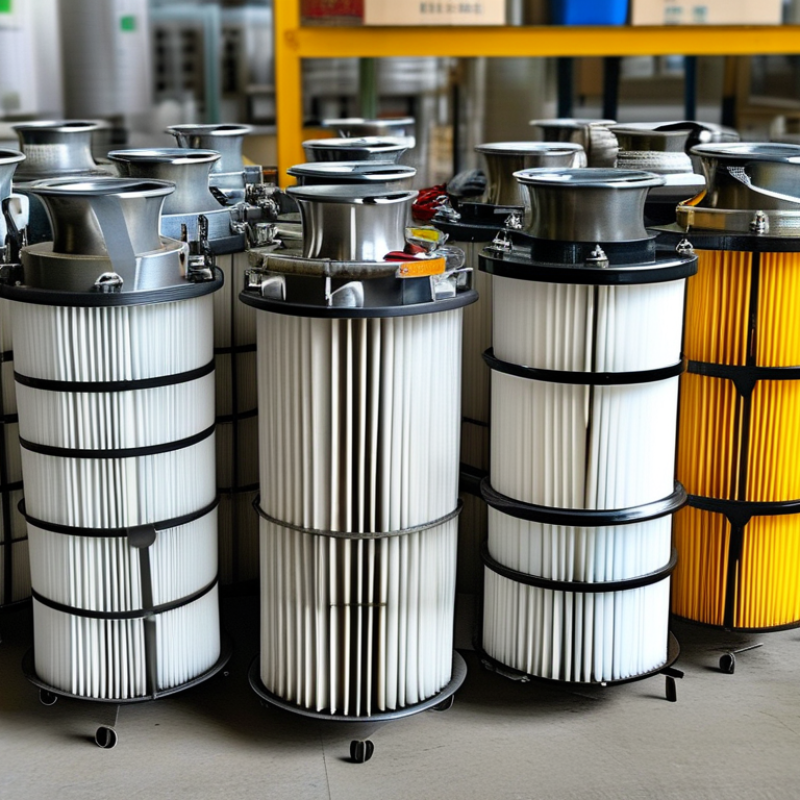
A filter basket is a removable, perforated container that separates solid particles from flowing liquids or gases. It is commonly installed inside a housing, pipeline, tank, or pump protection system. As fluid enters, the basket captures debris while allowing cleaner material to pass through. The basket can usually be lifted out, cleaned, and returned to service.
In practical maintenance work, filter baskets protect pumps, valves, heat exchangers, and spray nozzles from blockage or wear. Their openings may be measured in millimeters or microns, depending on the process. Stainless steel is widely selected for strength, corrosion resistance, and repeated cleaning. Perforated plates suit larger particles, while woven mesh handles finer filtration. Choose carefully. An overly fine basket can increase pressure loss and demand frequent cleaning.
A reliable selection starts with the fluid, temperature, flow rate, pressure, and particle size. Operators should also check the basket’s dimensions, sealing surface, and lifting arrangement. A loose fit may allow particles to bypass the filter. A damaged seal can create the same problem. In my experience, maintenance teams sometimes focus only on mesh size. That assumption is incomplete. Cleaning frequency, inspection lighting, and safe access matter too. No filter basket lasts forever. Even durable metal can deform, clog, or develop fatigue after repeated service. Recording pressure changes and cleaning intervals provides useful evidence for improving the next specification.
China Top 10 Filter Basket Manufacturers to Buy From? - What Are Filter Baskets and Why Are They Used?
A practical comparison of common filter basket configurations and the technical criteria used when evaluating suppliers.
| No. | Filter Basket Configuration | Typical Application | Common Material | Typical Filtration Range | Typical Operating Temperature | Main Selection Advantage | Recommended Quality Checks |
|---|---|---|---|---|---|---|---|
| 1 | Single-Layer Perforated Basket | Water intake, cooling-water systems and coarse solids removal | 304 or 316 stainless steel; carbon steel for selected non-corrosive services | Approximately 1–10 mm opening size | About 0–120°C, depending on material and gasket | High flow capacity and easy cleaning | Hole diameter, plate thickness, weld quality and dimensional accuracy |
| 2 | Single-Layer Woven-Mesh Basket | Lubricating oil, hydraulic oil and general liquid filtration | 304, 316 or 316L stainless steel wire mesh | Approximately 20–1,000 microns | About 0–200°C, subject to sealing materials | Provides more precise particle retention than perforated plate | Mesh count, aperture size, wire diameter and mesh integrity |
| 3 | Multi-Layer Sintered-Mesh Basket | High-pressure process lines, polymer processing and chemical service | 316L stainless steel or other specified sintered metal media | Approximately 1–200 microns | Commonly up to 500°C for suitable all-metal construction | Strong, stable pore structure with good backwashing capability | Sintering uniformity, collapse strength, permeability and weld penetration |
| 4 | Duplex Basket Strainer | Continuous-flow fuel, oil, water and chemical systems | Stainless steel basket with carbon-steel or stainless-steel housing | Approximately 25–3,000 microns | Typically 0–200°C, depending on pressure class and seals | Allows basket cleaning without stopping the process | Changeover sealing, valve synchronization, pressure rating and leakage testing |
| 5 | High-Flow Cylindrical Basket | Municipal water, industrial cooling and high-volume process liquids | 304 or 316 stainless steel with reinforced support frame | Approximately 0.5–5 mm opening size | About 0–120°C | Large filtration area and low pressure drop at high flow rates | Open-area ratio, support-bar strength, roundness and lifting provisions |
| 6 | Conical or Tapered Basket | Compact pipelines, temporary start-up filtration and suction lines | 304 or 316 stainless steel; optional perforated support layer | Approximately 50–3,000 microns | About 0–200°C, depending on construction | Easy insertion and removal in restricted spaces | Cone angle, fit inside the housing, reinforced nose and effective sealing area |
| 7 | Backwashable Basket | Continuous water treatment and automated process filtration | 316L stainless steel mesh or wedge-wire screen | Approximately 25–1,000 microns | Typically 0–150°C | Reduces manual maintenance and supports repeated cleaning cycles | Backwash flow path, screen rigidity, cycle durability and retained-particle removal |
| 8 | Wedge-Wire Basket | Food processing, water wells, pulp handling and solids separation | 304 or 316L stainless steel profile wire | Approximately 25–3,000 microns slot width | About 0–200°C | Continuous slots resist blinding and simplify cleaning | Slot uniformity, profile-wire alignment, weld strength and surface finish |
| 9 | Gas and Steam Basket | Compressed air, steam, gas transmission and utility protection | Stainless steel or carbon steel with a corrosion-resistant filter element | Approximately 5–500 microns | Commonly 0–400°C, depending on pressure, seals and material | Protects valves, meters and downstream equipment from particulates | Pressure-temperature rating, filter-area calculation, weld inspection and cleanliness |
| 10 | Sanitary Filter Basket | Beverage, dairy, pharmaceutical and hygienic liquid processing | 316L stainless steel with polished internal surfaces | Approximately 10–500 microns | Typically 0–150°C, depending on cleaning conditions | Cleanable design with reduced crevice and contamination risk | Surface roughness, drainability, sanitary welds, passivation and clean-in-place compatibility |