Top Custom Cellophane Self Adhesive Labels Suppliers
Choosing a supplier for custom cellophane self adhesive labels takes more than comparing prices. The right partner should understand your product, packaging surface, and production needs. A clear label on a glass jar can look crisp under bright shop lights, while the same adhesive may behave differently on a chilled bottle. Small details matter.
This guide explores suppliers through practical factors: material options, print quality, adhesive performance, order flexibility, and communication. Ask how suppliers control roll consistency and whether they can provide samples for testing. Check that artwork proofs show fine text and transparent areas as intended. Then test labels on your actual packaging, including under expected storage conditions. A neat sample is useful, but it cannot answer every production question.
There is no universal best supplier. A low unit price may come with higher setup costs, longer lead times, or limited customization. And specifications can be easy to overlook. Request written details for dimensions, core size, winding direction, and minimum order quantities before placing an order. If sustainability matters, ask for specific material and disposal information rather than relying on broad claims. Cellophane can describe different products in everyday sales language, so confirm the exact film composition. This guide offers a grounded starting point, not a shortcut around testing. A little caution helps.
What Custom Cellophane Self-Adhesive Labels Are
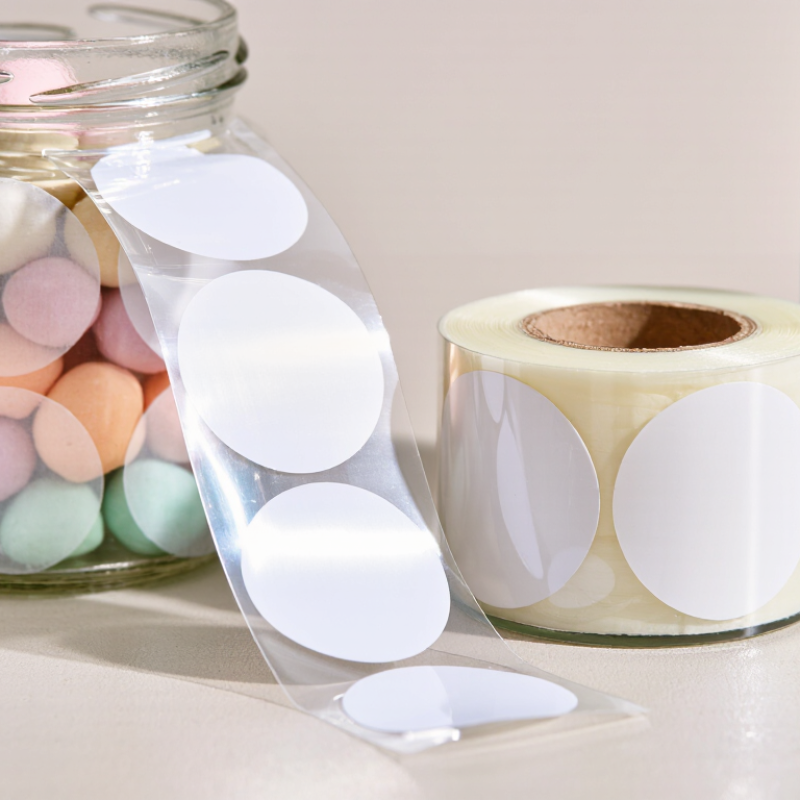
Custom cellophane self-adhesive labels pair a thin, clear film made from regenerated cellulose with a pressure-sensitive adhesive. The adhesive bonds when pressed, so labels can be applied without water or heat. “Cellophane” describes the label face, not the whole construction: coatings, inks, release liners, and adhesive all affect clarity and performance. The result can create a printed-on-glass look. Sometimes it is almost too invisible.
Custom options include label shape, dimensions, print colors, finish, and adhesive strength. A small batch of clear jars might use a fine-cut label with white ink beneath pale lettering, keeping text readable against changing contents. Test samples on the actual package. Curved glass, chilled surfaces, and condensation can expose lifting edges or weak adhesion that a flat sample will miss. Cellophane is not automatically compostable; coatings and adhesives matter.
The wider label market shows why material choices deserve care. Smithers’ The Future of Global Labels to 2028 estimated the global label market at about US$46.5 billion in 2023, with a projected value of US$67 billion by 2028. That broad market figure is not specific to cellophane, but it signals sustained demand for varied label formats. Ask suppliers for face-material and adhesive specifications, plus application testing guidance. A glossy sample can look convincing. Real-world handling may tell a less tidy story.
How Cellophane Label Materials and Adhesives Work
Top Custom Cellophane Self Adhesive Labels Suppliers
Cellophane labels use a thin film made from regenerated cellulose. The film is clear and can give packaging a crisp, glass-like appearance. Some films have coatings that improve printability or moisture resistance, so performance depends on the exact construction. Check the material specification rather than assuming every cellophane label behaves alike.
The adhesive is pressure-sensitive: firm application helps it spread across the surface and form a bond. Clean, dry glass or smooth packaging usually provides a more consistent result than dusty, oily, or textured surfaces. Even a small patch of condensation can weaken initial contact. Press along the label edges, too. That detail matters.
Application temperature and storage conditions also affect adhesion, so test labels on the actual container before ordering a large run. Cellophane can respond to humidity differently from many synthetic films, and the finished label may shift slightly under changing conditions. Not every label needs the strongest adhesive; an overly aggressive bond can make removal difficult or damage delicate packaging. I’d treat supplier claims as a starting point, not a substitute for a practical test.
Common Customization Options for Cellophane Labels
Custom cellophane labels can be tailored in several practical ways. Start with the film: clear stock gives jars a “no-label” look, while white or tinted stock makes the design more visible. Choose gloss for bright colors or matte for a softer finish.
Small details matter. On clear film, white ink beneath pale text can keep it readable against dark contents. Without it, the lettering may disappear.
Adhesive, shape, and print layout deserve equal attention. Permanent adhesive suits products that face handling or moisture; removable adhesive may work better for temporary displays. Ask suppliers to test the adhesive on your actual container, especially if its surface is curved or textured. Die-cut shapes can follow a logo or product silhouette, but tiny corners may lift.
That choice can be wrong.
The Flexible Packaging Association’s 2023 State of the U.S. Flexible Packaging Industry report valued the sector at $42.9 billion in 2022. This scale highlights how many package formats labels must fit, though it does not guarantee a particular adhesive will perform well.
Request a physical proof, check the roll direction, and compare the printed sample under store lighting before approving production.
How to Evaluate Custom Cellophane Label Suppliers
Top Custom Cellophane Self Adhesive Labels Suppliers
When evaluating custom cellophane label suppliers, look beyond the sample sheet. Ask for the film type, thickness, adhesive specification, and expected performance on your packaging. A label applied to a chilled glass jar may behave differently from one placed on a dry carton. Specific answers matter.
Request samples made with your intended artwork, finish, and container. Apply them to clean packaging, then check for bubbles, edge lifting, and changes in clarity. Test after handling and storage in realistic conditions. Keep notes, even if the results seem obvious. They often are not.
Ask how the supplier checks print consistency, cutting accuracy, and adhesive quality between production runs. Confirm what information appears on the quote, including tolerances, lead time, and sample approval steps. A careful supplier should explain limitations without promising perfection. No checklist catches everything. Sometimes a sample looks excellent on day one, then wrinkles after repeated handling. That is worth discussing before placing a larger order. Compare suppliers using the same test conditions, and be cautious when specifications remain vague.
Leading Suppliers of Custom Cellophane Self-Adhesive Labels
Leading suppliers of custom cellophane self-adhesive labels help businesses balance clear presentation with dependable application. Cellophane’s transparent finish can let product colors show through, while printed details remain easy to read. A capable supplier should explain film thickness, adhesive options, print methods, and roll specifications in plain terms. Ask how labels perform on your actual packaging, not only on a sample card. A label that looks perfect on glass may wrinkle on a curved jar.
Tips: Share the package material, surface shape, storage conditions, and label size before requesting a quote. Test a small batch. Check adhesion, edge lift, and readability after application. Keep one sample for comparison.
Reliable suppliers provide clear proofs and confirm details such as core size, winding direction, and delivery quantities. They should also discuss limitations honestly; very small text or dense artwork can lose clarity on delicate transparent film. Request a physical proof when color and alignment matter. Then apply labels to clean, dry packaging and allow time to see how the adhesive settles. I have found this step easy to overlook. It can reveal problems before a larger order is produced. A supplier’s responsiveness matters, too, especially when specifications need a careful revision.