top of page

Top Concrete Specialties Manufacturers in China

China’s scale makes it a major market for Concrete Specialties, including admixtures, waterproofing systems, repair mortars, fibers, and curing compounds. The National Bureau of Statistics of China reported cement output of about 2.02 billion tonnes in 2023, a 0.7% year-on-year decline. That figure signals both the industry’s size and its exposure to changing construction demand. It does not, by itself, measure specialty-material sales.

Performance matters on site. A worker needs an admixture that disperses evenly in a mixer, or a repair mortar that bonds to a damp, uneven surface. Small differences in formulation and technical support can affect placement, curing, and long-term durability. The International Energy Agency identifies cement production as responsible for roughly 7% of global COâ‚‚ emissions. This adds pressure to improve material efficiency and reduce waste. The target is clear; results vary.

This guide introduces leading Chinese manufacturers and the product areas they serve. It considers production capabilities, technical documentation, quality systems, export experience, and application support. These factors offer a practical starting point, not a guarantee of performance. Supplier claims should be checked against current certificates, test methods, project references, and site-specific trials. Public information can be incomplete, and rankings can miss regional strengths. A careful comparison still takes work.
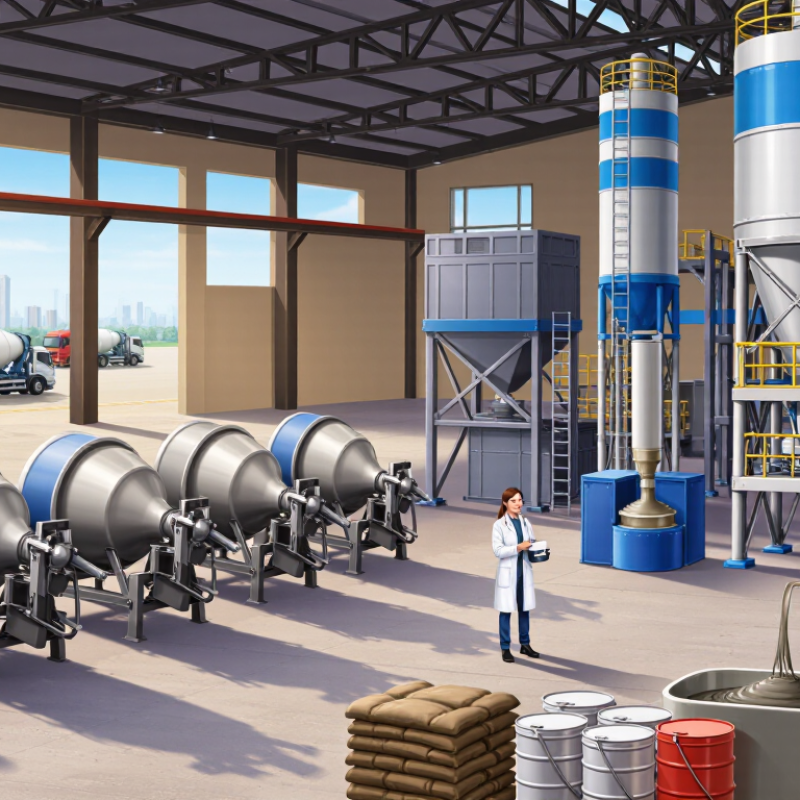
Top Concrete Specialties Manufacturers in China

What Are Concrete Specialties in the Construction Industry?

Concrete specialties are products designed to improve, protect, repair, or finish concrete beyond the basic mix. They address practical demands such as faster setting, reduced water penetration, abrasion resistance, and reliable bonding. Common examples include chemical admixtures, repair mortars, non-shrink grouts, curing compounds, sealers, surface hardeners, and joint fillers. Some are blended into fresh concrete; others are applied after placement or during repairs. Small details matter.

The right product depends on the substrate, exposure, installation method, and surrounding materials. A warehouse floor may need a hard-wearing surface treatment, while a damp basement wall may call for a compatible waterproofing system. For repair work, installers should check the existing concrete’s condition and prepare the surface as specified. Product data sheets can clarify coverage, temperature limits, curing time, and application thickness. A small trial area can reveal issues before full installation. Even with careful selection, results can vary with site conditions and workmanship. The category itself can be blurry: products with similar names may serve different purposes, so performance requirements matter more than labels.

How Is China’s Concrete Specialties Manufacturing Sector Organized?

China’s concrete specialties sector is organized around product function, regional demand, and project delivery. Manufacturers typically focus on admixtures, repair mortars, grouts, fibers, or surface protection. Some supply standard formulations; others adjust mixes for local aggregates, climate, and site conditions. The distinction matters. A product used in a coastal bridge may not suit a dry, cold inland site.

The National Bureau of Statistics’ Statistical Communiqué on 2023 reported construction output value of 31.59 trillion yuan and cement production of 2.02 billion tonnes. These figures show the scale of the building-materials base, not specialty-product sales. Specialty suppliers sit between chemical and mineral input producers and contractors, with distributors serving smaller sites and technical teams supporting major projects. Specification approval and consistent batch testing shape purchasing decisions. On site, a technician may check slump, setting time, or adhesion before a pour or repair. Reporting remains imperfect: public statistics rarely separate specialty materials cleanly, so market-size claims need careful scrutiny.

Top Concrete Specialties Manufacturers in China – How Is China’s Concrete Specialties Manufacturing Sector Organized?

Overview of the sector by product category, typical inputs, manufacturing activities, applications, and common quality-control considerations. The table describes industry segments rather than ranking or identifying individual manufacturers.

Manufacturing Segment Representative Products Typical Inputs Common Manufacturing Activities Typical Applications Common Quality-Control Checks
Concrete admixtures Water reducers, superplasticizers, retarders, accelerators, air-entraining agents, and shrinkage-control admixtures Chemical raw materials, polymers, surfactants, water, and formulation additives Batching, blending or reaction processing, dilution, filtration, and packaging as liquid or powdered products Ready-mixed concrete, precast production, pumping, and concrete placement in varied weather or construction conditions Appearance, density, pH, solid content, storage stability, and performance in cement or concrete compatibility tests
Dry-mix mortar and repair materials Non-shrink grouts, repair mortars, tile adhesives, jointing materials, and self-leveling compounds Cementitious binders, graded sand, mineral fillers, polymers, fibers, and performance additives Raw-material drying where required, sieving, precise dry blending, batch sampling, and moisture-resistant packaging Concrete repair, equipment foundations, floor leveling, tile installation, and joint filling Particle-size distribution, moisture, flow or workability, setting behavior, bond strength, and compressive strength
Waterproofing and protective systems Cementitious waterproof coatings, concrete sealers, protective coatings, and waterstops Cement, mineral fillers, polymers, resins, pigments, and functional additives Powder blending or liquid dispersion, filling, packaging, and testing of application and film properties Basements, roofs, water-retaining structures, tunnels, bathrooms, and exposed concrete surfaces Product consistency, workability, adhesion, crack-bridging or water-resistance performance, and coating integrity
Flooring and surface-treatment materials Concrete hardeners, densifiers, floor toppings, surface sealers, and industrial floor coatings Mineral aggregates, cementitious binders, silicate or resin components, pigments, and additives Aggregate grading, blending or liquid formulation, color and batch checks, and controlled packaging Warehouses, factories, parking structures, commercial floors, and other concrete traffic surfaces Color and batch consistency, abrasion resistance, adhesion, surface finish, and application-related performance
Anchoring and structural grouting materials Anchoring grouts, precision grouts, bedding grouts, and injection materials for defined repair uses Cement or resin binders, graded mineral aggregates, fillers, and setting or flow-control additives Controlled batching, blending, component separation where required, filling, and application-performance testing Base plates, machinery foundations, anchor installations, precast connections, and structural repair work Flow, setting time, volume stability, compressive strength, bond performance, and mixing consistency
Fiber-reinforced concrete materials Steel, synthetic, glass, or other suitable fibers supplied for use in concrete and mortar mixes Metal wire or polymer and glass feedstock, plus surface treatments or sizing where applicable Drawing or fiber formation, cutting, surface treatment where required, grading, and packaging Industrial floors, precast components, shotcrete, and other applications designed around specified fiber performance Fiber dimensions, tensile properties, dispersion characteristics, surface condition, and conformity to the specified product grade
Concrete testing and application support Mix-design assistance, product selection guidance, site trials, and application troubleshooting Project specifications, cement and aggregate samples, mix data, and product technical information Laboratory evaluation, trial batching, performance comparison, and technical documentation Product qualification, construction planning, troubleshooting, and verification under project-specific conditions Documented test methods, traceable samples, controlled test conditions, and comparison with project requirements

Product composition and test requirements vary by formulation, intended use, applicable standards, and project specifications. Concrete-specialties manufacturers commonly serve construction-material distributors, ready-mixed concrete producers, precast plants, contractors, and infrastructure projects.

Which Concrete Specialty Products Do Chinese Manufacturers Produce?

Chinese manufacturers produce a wide range of concrete specialty products for construction, repair, and finishing. These include precast drainage channels, paving blocks, wall panels, and architectural components. Many factories also make dry-mix repair mortars and non-shrink grouts. These materials help fill gaps beneath equipment bases or repair chipped edges. Small details matter.

Other common products include waterproofing compounds, concrete admixtures, and fiber-reinforced mixes. Admixtures can change setting time or improve workability, but results depend on dosage, temperature, and the cement used. Decorative options include colored concrete, exposed-aggregate finishes, and stamped surfaces that resemble stone. Product names alone reveal little. Buyers should review technical data, test reports, and sample performance under comparable conditions.

Manufacturing capability varies between suppliers, even when their catalogs look similar. A precast panel may meet a project’s dimensions but still require checks for strength, surface quality, and curing consistency. For repair products, technicians should confirm substrate preparation and recommended application thickness. Catalogs can make every solution look straightforward; actual site conditions are less tidy. Clear specifications and independent testing help narrow the gap between a product’s stated performance and its behavior on site.

What Capabilities Distinguish Leading Concrete Specialties Manufacturers?

Leading concrete specialties manufacturers combine material knowledge with consistent production control. They understand how cement chemistry, aggregate grading, temperature, and moisture affect admixture performance. Reliable teams check incoming materials, monitor batch weights, and retain samples for later testing. They also compare laboratory results with concrete trials, where mixing time and water content can change workability. Small details matter.

Strong technical support is another key capability. Manufacturers should provide clear product data, explain recommended dosage ranges, and help customers assess setting time, slump retention, or air content. Practical advice should reflect local materials and site conditions, not just ideal laboratory results. A capable supplier can investigate inconsistent performance without immediately blaming the contractor. Still, no formulation works perfectly everywhere. Results may vary, and even experienced teams sometimes need another trial batch.

Tips: Ask for recent test records, sample retention practices, and a controlled field-trial plan. Check whether support staff can explain both the benefits and limits of a product. A polished data sheet helps, but it cannot replace clear answers about your mix.

What Capabilities Distinguish Leading Concrete Specialties Manufacturers?

A useful measure of admixture performance is whether products meet recognized, testable requirements—not simply how they are marketed.

ASTM C494/C494M sets minimum water-reduction requirements of 5% for Types A, D, and E, and 12% for Types F and G. These are standard test thresholds, not ratings of individual manufacturers. Formulation expertise, quality control, and application support help manufacturers consistently deliver products suited to project conditions.

How Can Buyers Compare Concrete Specialties Manufacturers in China?

When comparing concrete specialties manufacturers in China, start with the intended job, not the catalogue. A repair mortar for a damp basement needs different performance from a surface hardener for a busy warehouse. Ask for technical data sheets that state dosage, substrate conditions, curing time, and temperature limits. Check whether test results match the product and application you are buying. Ask for evidence.

Then test a small sample using your own cement, water ratio, and mixing equipment. Record workability, setting time, adhesion, and finish under realistic site conditions. A neat sample on a desk proves little. Batch consistency matters, too; request production records or quality-control procedures, and clarify how changes in raw materials are managed. Small details matter.

Compare practical supply terms alongside performance. Confirm minimum order quantities, lead times, packaging suited to long-distance transport, and how the manufacturer handles damaged goods or technical questions. Clear answers are useful, but written specifications are better. If a claim sounds unusually broad, ask what conditions support it. I would not choose on price alone; yet it is easy to overvalue paperwork and overlook whether the product works with local materials. A trial run can reveal that gap.

Concrete Products Unlimited

Mon-Fri 8AM - 5PM

Concrete products, wholesale Arizona river rock for landscaping, decorative rock, sand and gravel. Rock quarry located in Arizona and delivers throughout the USA.

©2003 by Concrete Products Unlimited

bottom of page